
- Why it seems that alcohol helps with anxiety: 4 situations when you crave a drink
- Anxiety switch-off: what happens in the brain in the first minutes
- Hangover anxiety: why it feels worse the next day
- Avoidance loop: how alcohol takes away confidence before events
- Habit trap: when alcohol becomes a reflex without a decision
- Step-by-step guide: how to break the link between anxiety and alcohol in everyday situations
- Comparison: strategies for responding to anxiety without alcohol
- Frequently asked questions
- Conclusion: why understanding the mechanism helps take the first step
ATTENTION: This material is for informational purposes only and is intended for general support. It is not medical advice, does not provide diagnoses, and does not replace professional treatment. If you experience severe physical withdrawal symptoms, be sure to consult a doctor or qualified medical professional.
1.Why alcohol seems to help with anxiety: 4 situations when you feel like drinking
Anxiety and alcohol often go hand in hand. When tension rises, a glass promises quick relief—and the brain is eager to believe it. Relief does come, but it is brief, and the consequences work against you.
In this article — four different situations where alcohol appears, and each triggers its own mechanism: what happens in the brain in the moment, why anxiety is worse the next morning, how a loop forms before important events, and how all of this becomes an automatic habit. These are not the same phenomenon under different names, but four separate points, each of which is a place where the cycle can be broken.
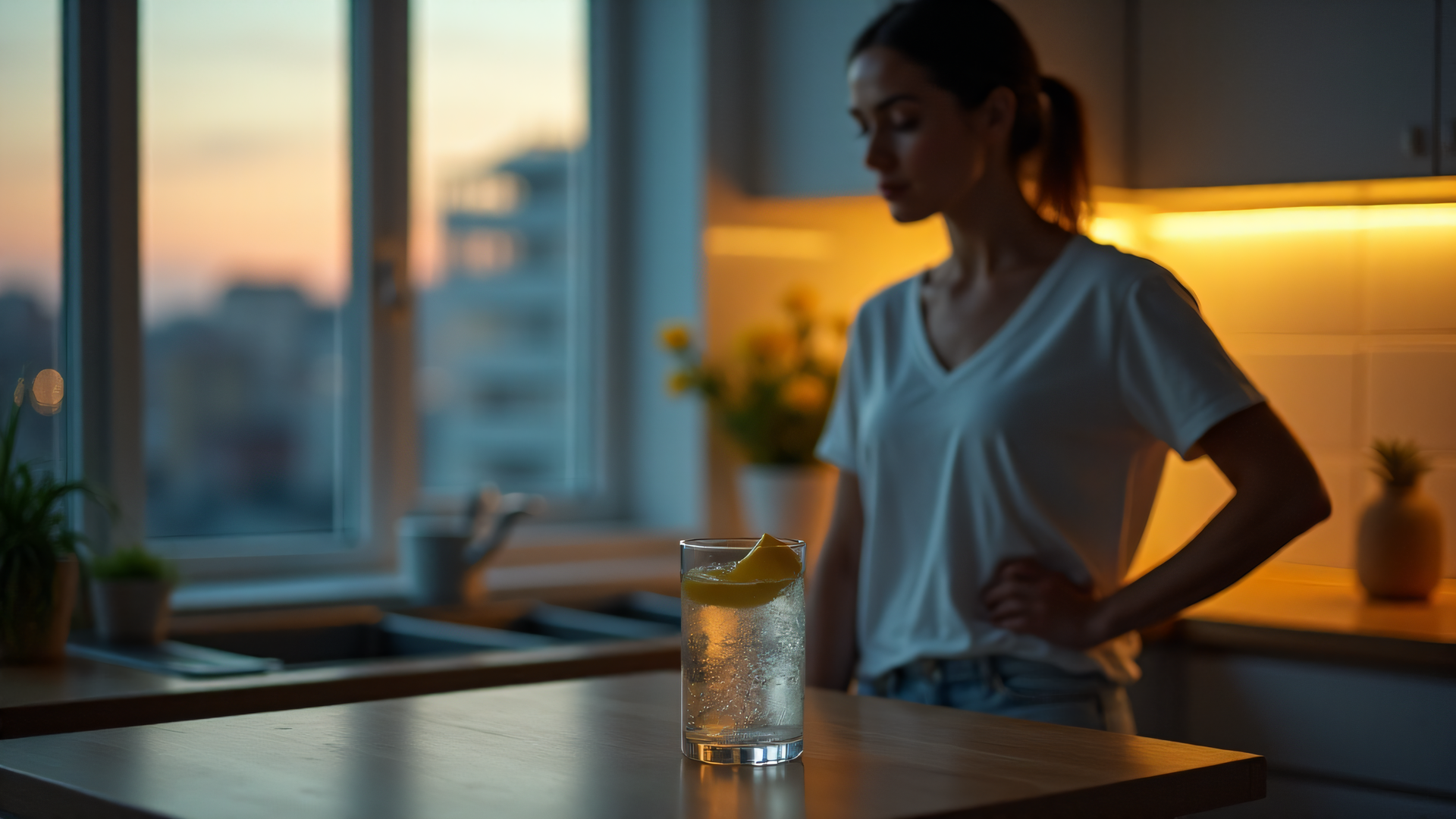
2. Alarm switch: what happens in the brain in the first minutes
After a stressful day: why the body relaxes so quickly
After a stressful day, the body remains tense: muscles are clenched, breathing is shallow, thoughts are spinning in circles. The first dose of alcohol really extinguishes this feeling—and does so quickly.
Direct mechanism: alcohol enhances the action of GABA—the main inhibitory signal of the brain—and dampens excitation [1] Therefore, within 20–30 minutes after the first dose, the body relaxes, thoughts slow down, and fears seem to recede into the background.
But this is not calm, but a temporary silencing of the signal. While alcohol is active, the brain does not learn to cope with anxiety on its own — it simply waits for the next dose. The source of tension remains untouched.
Try this: If you feel tense in the evening, take a short pause before reacting. Even 5 minutes of mindful breathing or journaling your thoughts gives your brain an alternative to the “off switch” in the form of alcohol.
- GABA inhibition reduces the excitability of the nervous system within minutes.
- Subjectively, this feels like regained control over emotions.
- The cause of anxiety in this case remains untouched.
That is why, in the moment, alcohol seems like a savior: it targets the symptom—agitation—rather than what causes the anxiety. This is an acute “here and now” effect. What happens next will be covered in the following sections.
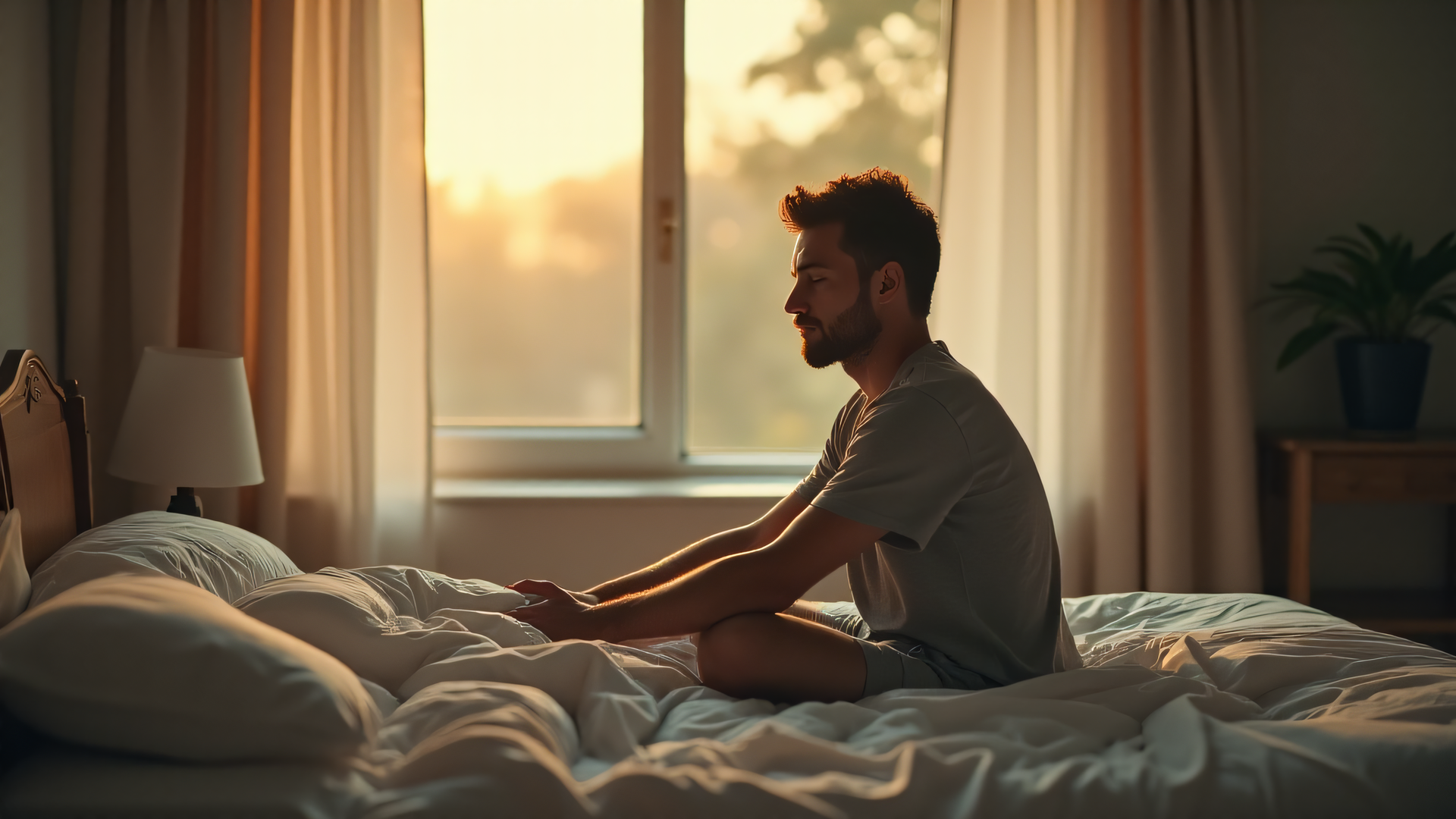
3. Hangover anxiety: why the next day feels worse
After the party: why you wake up with anxiety
The biggest paradox is not in the evening, but in the morning. When the alcohol wears off, the brain compensates for the nighttime inhibition with a rebound surge of excitement. Hence the “hangover anxiety.”
Here’s how it works: at night, alcohol suppressed your nervous system, so now it responds with increased sensitivity to stress. Add in reduced REM sleep—even if you fell asleep quickly, the deep sleep phases were shortened. As a result—heart palpitations, alertness, irritation over trifles, and physical fatigue already in the morning.
Note: some people may experience these symptoms more intensely. If you notice tremors, rapid heartbeat, or confusion, this is a signal to consult a doctor. Not all bodily reactions can be safely managed on your own.
- Sleep disturbances: even a single serving can disrupt the REM sleep cycle and increase anxiety the next day.
- Sensitivity to stress in the morning remains elevated for several hours in some people.
- Guilt or shame about yesterday adds internal tension on top of the physical comedown.
Tip: If you wake up feeling anxious after drinking alcohol, don’t rush to analyze the events of the evening. Instead, take a short walk — a change of environment often helps to reduce tension.
This morning setback is easy to mistake for “personality” or external circumstances, rather than the effect of alcohol. Because of this, it can be hard for loved ones to understand why attempts to “relax” the person don’t bring stable results — more about this in the article about support at home.

4. The avoidance loop: how alcohol takes away confidence before events
Before an important event: why your hand reaches for a glass
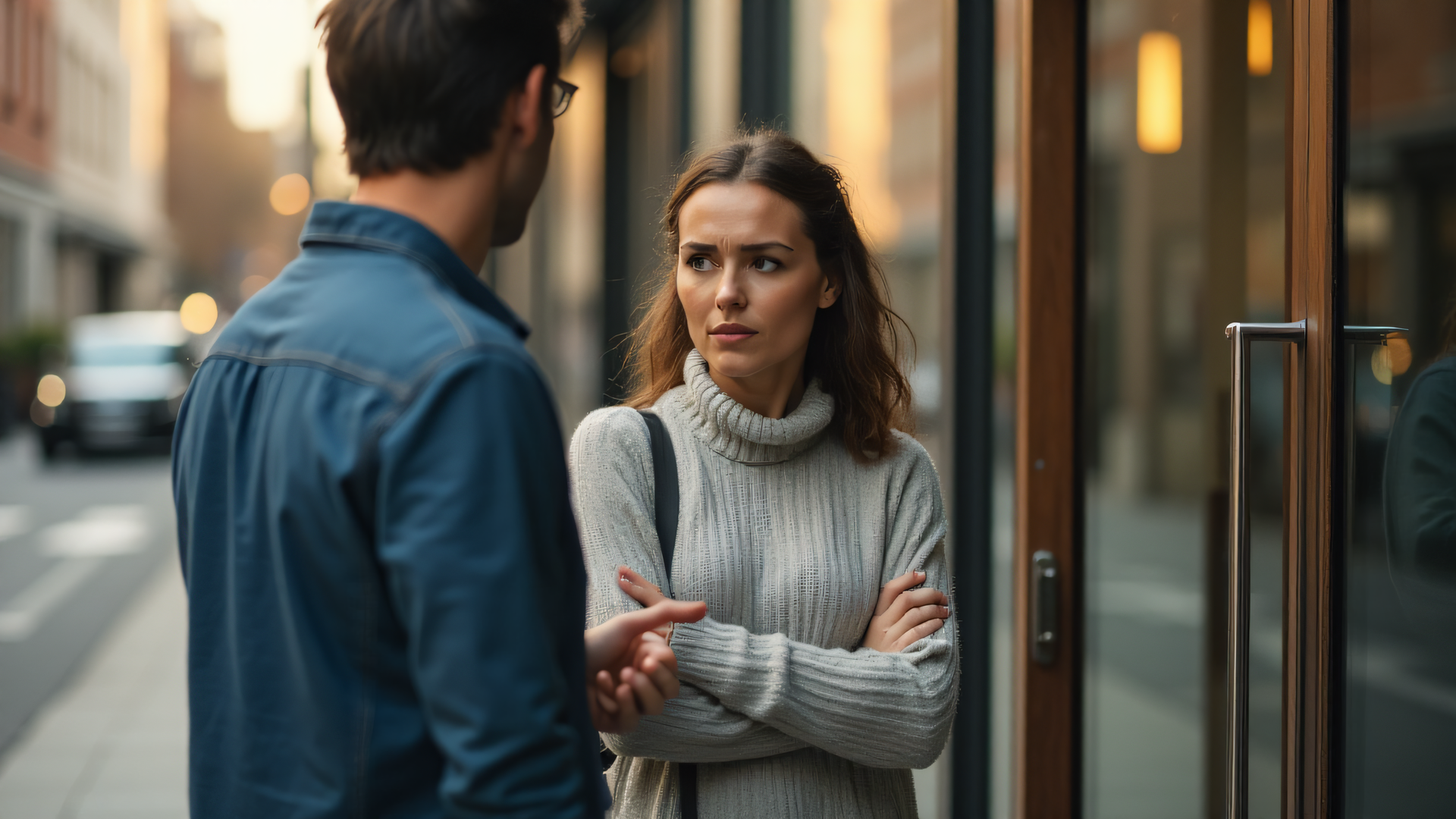
Here, it’s no longer the chemistry of the moment that decides, but learning. Before an interview, a presentation, or meeting new people, anxiety rises like a wave—and if you drink, it subsides for a short while. The brain registers this as a successful escape.
Next time he suggests the same move even before the event. That’s how avoidance works: you mute the anxiety instead of experiencing it and making sure you can handle it. This is negative reinforcement — the behavior is reinforced by removing the unpleasant feeling.
Hidden cost — uncertainty grows. Every escape silently tells your brain that you can’t handle the situation without alcohol. Over time, even the thought of an upcoming event triggers the desire to drink.
This cycle works like a closed loop:
- Anxiety increases before a specific event.
- Alcohol provides a short escape — and the brain registers it as a “solution.”
- Next time, the desire to drink arises just at the thought of the event.
- Without alcohol, the situation becomes even more frightening — and the noose tightens.
Try this: When you feel anxious before an event, pause and briefly write down exactly what you are afraid of. This separates real risks from imagined ones and reduces impulsiveness.
5.
Routine evening: how an automatic reaction is formed
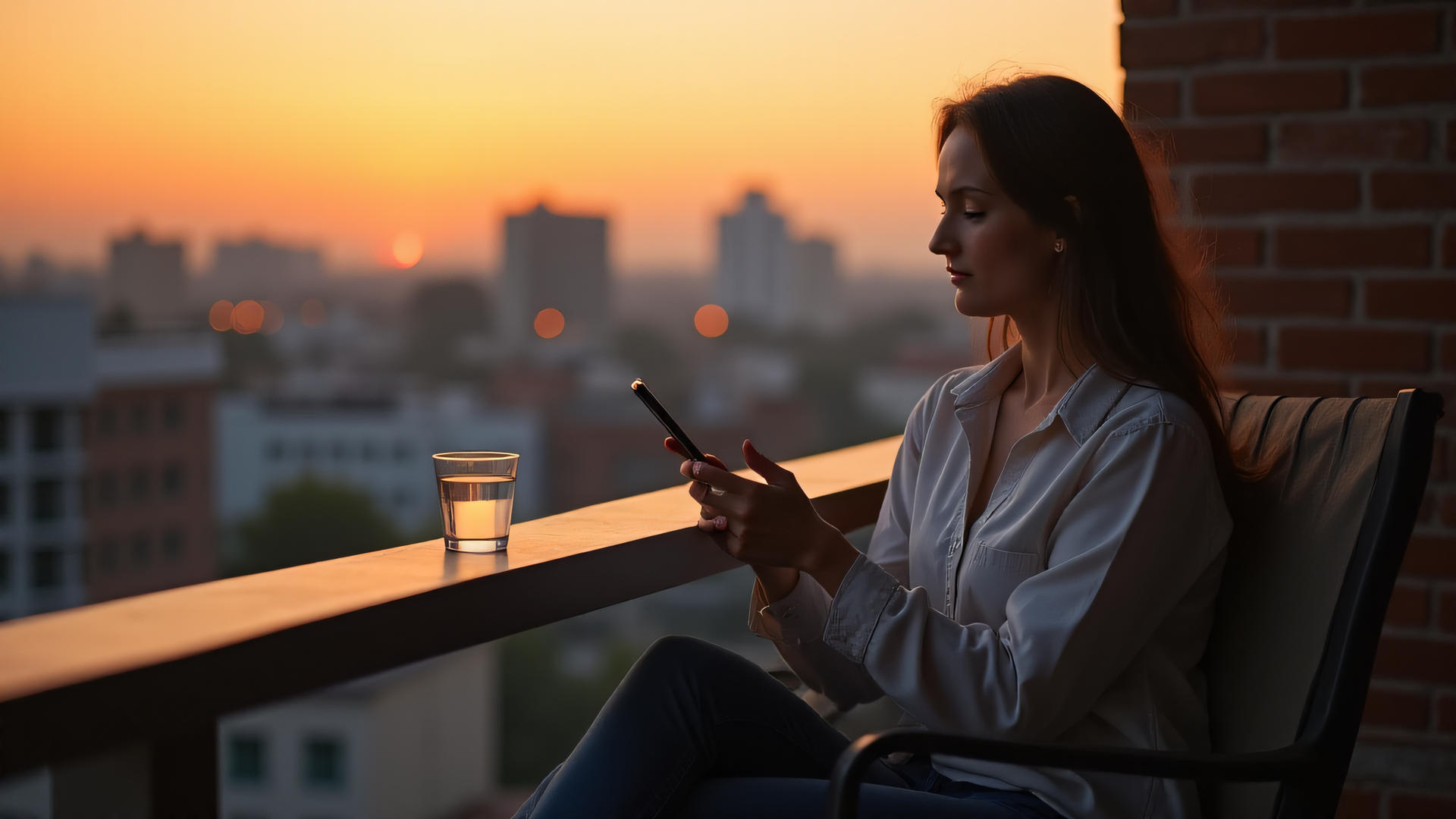
A habit doesn’t ask for permission. When the “evening — alcohol” connection is repeated several times in a row, the chain “trigger → drink → relief” becomes ingrained in the brain as an automatic response. Over time, it works almost without conscious involvement — alcohol becomes not a choice, but a reflex.
This is driven by reinforcement learning: the reward system has already registered a quick effect, so next time it offers it on its own. Even when what you really need is rest, support, or just to switch gears — your hand reaches for the glass first.
In a state of anxiety, the brain also sees fewer alternatives. Cognitive distortions are triggered: “nothing will help except drinking.” How exactly these distortions affect choices is discussed in the material about cognitive distortions of the dependent brain.
A habit can become established even on “neutral” evenings: there is no obvious anxiety, but the scenario is already familiar — dinner, a TV series, alcohol. This creates an illusion of control, although the brain is simply triggering a learned loop.
- The first element is a trigger: physical or emotional fatigue.
- Second — familiar surroundings or ritual (kitchen, glass, music).
- Third — the automatic thought: “it will get easier now.”
Try: change at least one element of your evening routine — a different non-alcoholic drink, a new spot in the apartment, a short walk. Breaking one element disrupts the habitual chain.
6. Step-by-step guide: how to break the link between anxiety and alcohol in everyday situations
Step 1: Track in which ‘mask’ alcohol appears
The first step is to catch the moment when your hand reaches for alcohol and honestly identify which “mask” is being activated right now. It could be the “Anxiety Switch-Off” after a hard day, the “Emotion Booster” in an evening gathering, the “Avoidance Loop” during a conflict, or the “Habit Trap” in a familiar scenario. Such analysis allows you to see that behind the desire is not just a habit, but a specific emotional need or stress.
Most people don’t notice the moment of transition from thought to action. But if you pause and name your “mask,” you already create space for choice. This step shifts the focus: alcohol is not a universal remedy, but just one of the reactions to anxiety.
- After an argument — “The Avoidance Loop”
- Before sleep — “Alarm Switch”
- In the company — “Emotion Amplifier”
- Automatically after work — “Habit Trap”
Tip: Try to briefly write down which “mask” you noticed. Even a single word will help separate the emotion from the action.
Step 2: Pause and acknowledge the emotion
Next — a pause, at least for 2–3 minutes. At this moment, it’s important not to run away from the emotion, but to name it: is it irritation, fatigue, anxiety, or loneliness? Research shows that when a person names their emotion out loud or writes it down, the area of the brain responsible for self-regulation is activated. This isn’t magic — it’s concrete neurobiology.
It seems that alcohol “quenches” emotions, but in reality it only postpones meeting them. A short pause allows you not to act impulsively, but to distance yourself a bit from automatism.
If it’s difficult — you can use a simple technique: “I feel ______, and that’s okay.” This approach often reduces tension right away.
Step 3: Choose one small action instead of an automatic reaction
The third step is not to demand heroism from yourself, but to choose one simple action that does not repeat the pattern “alcohol = relief.” This could be a short walk, a call to a friend, changing your location, or even simply switching your attention to another activity.
The psychological mechanism here is simple: every time you change the pattern, the brain gradually loses the connection “anxiety = alcohol.” Even 5–10 minutes of an alternative activity is enough to reduce the intensity of the impulse.
- Instead of wine — a shower and your favorite playlist
- Instead of company with alcohol — a short message to someone you trust
- Instead of an evening drink — a calming ritual without substances
Step 4: Mark this moment in the tracker or diary
Recording such moments in a sobriety tracker or personal diary is not just statistics. It’s a way to see your real progress and identify which “masks” work most often. Such notes help the brain form a new pattern: every time you notice and stop an automatic reaction, you build a new neural pathway.
Often, after several such observations, it becomes noticeable: emotional tension can decrease even without alcohol. In the Soberise app, there is a diary function where you can quickly note which “mask” worked and what you did differently. This enhances the sense of control and gradual change.

7. Comparison: strategies for coping with anxiety without alcohol
There are several effective approaches that help cope with anxiety without returning to alcohol. The choice depends on your “mask”—that is, the typical scenario in which anxiety and alcohol intertwine in your life.
| Parameter | Conscious pause (“Anxiety switch-off”) | Physical release (“Emotion booster”) | Evening planning (“Habit trap”) |
|---|---|---|---|
| Main idea | Stop, feel your body, name the emotion, do not act impulsively | Give your body movement to release tension (a short walk, stretching, light workout) | Consciously plan your evening to avoid automatic cravings for alcohol |
| Mechanism of action | Reduces impulsivity, helps reveal the true source of anxiety | Shifts focus from thoughts to physical sensations, gradually lowers stress levels | Forms new rituals, weakens the automatism “tension = alcohol” |
| When to use | In moments of acute tension at home or after stress at work | When anxiety manifests as bodily stiffness, irritability, restlessness | In the evening, when the usual scenario is to drink for “relaxation” |
| Pros | Quickly restores control, reduces the risk of impulsive actions | Available at any moment, often gives a sense of relief even in 10 minutes | Reduces the risk of relapse in “automatic” situations, strengthens the sense of autonomy |
| Possible difficulties | The first times may seem “ineffective,” requires practice | Does not always help with deep emotional anxiety if emotions are avoided | Requires prior planning, and there is not always the energy or desire to do it |
| Who it suits | For those whose reaction to acute anxiety or tension is alcohol (“Anxiety switch-off”) | For those who feel anxiety in the body, not just in thoughts (“Emotion booster”) | For those whose alcohol use is part of a routine evening (“Habit trap”) |
Why does anxiety appear or worsen after drinking alcohol?
After consuming alcohol, many people may experience stronger anxiety, especially the next day. This is because alcohol initially slows down the nervous system, but the body compensates — and a “rebound” occurs. That’s when anxiety, irritability, or tension often intensify. If these feelings are very intense or accompanied by physical symptoms (tremor, strong heartbeat, confusion), be sure to consult a doctor.
Why does alcohol initially relieve anxiety, but then make it worse?
Alcohol acts as an “anxiety switch-off” — it temporarily blocks tension, but this effect fades quickly. The brain adapts, and when the alcohol wears off, the self-regulation system becomes more vulnerable. That’s why anxiety returns, sometimes even stronger. This is a natural reaction to external interference with the nervous system. Over time, the brain can gradually learn to cope without this “switch-off” if you change your response habits.
Can alcohol cause an anxiety disorder?
For some people, regular alcohol consumption can indeed contribute to the development or worsening of an anxiety disorder. This is due to chronic changes in the reward system and stress responses. The risk increases especially if alcohol becomes the main way to cope with emotions. If anxiety lasts a long time and interferes with daily life, it’s worth consulting a specialist to assess your condition and find alternative support strategies.
What should I do if anxiety after alcohol doesn’t go away for several days?
Anxiety can remain elevated for several days after drinking alcohol, especially if the body is used to a regular dose. This is because the nervous system gradually readjusts. Don’t blame yourself — give your body time and focus on the basics: sleep, nutrition, physical activity, support from loved ones. If anxiety is accompanied by severe physical symptoms or does not decrease, seeing a doctor is a safe step.
Is it normal for anxiety to feel stronger without alcohol?
After quitting alcohol, anxiety can indeed temporarily intensify for many people. This is a typical effect of the “emotions amplifier” and “avoidance loop”: the body gets used to an external relaxation mechanism, and without it, emotions become sharper. Over time, the nervous system can gradually learn to regulate anxiety without alcohol. During this period, try alternative support methods: breathing techniques, short breaks, talking with a close person or a support group.
Conclusion: why understanding the mechanism helps take the first step
When you notice how the “Anxiety Switch-off,” “Emotions Amplifier,” “Avoidance Loop,” and “Habit Trap” show up in your life, the feeling of guilt gradually fades. It’s not just weakness — it’s a specific cycle in which the brain has learned to seek alcohol as a quick answer to anxiety. Knowing this mechanism means gaining space for choice: you’re no longer acting on autopilot.
- Identify today under which “mask” alcohol and anxiety appear for you — briefly write it down in a note or journal.
- Make an SOS plan for the upcoming evening: what will you do if tension or the urge to drink appears (for example, a short pause, calling a friend, changing the environment).
- Do a check-in in the Soberise app to track your state and notice how your reaction to anxiety changes.
You can influence this cycle today — even if it’s just one small step.
Your sobriety counter — in your pocket
Soberise — a mobile app for sobriety support. Day tracker, daily check-in, SOS mode for cravings, and a support circle.