
Attention:This material is for informational purposes only and is intended for general support. It is not medical advice, does not provide diagnoses, and does not replace professional treatment. If you experience severe physical withdrawal symptoms, be sure to consult a doctor.
- Why the first week of sobriety is so hard: the anatomy of withdrawal
- How withdrawal manifests: symptoms and what’s behind them
- The biochemistry of the first week: what happens to the brain and body
- What support actually works: resources and approaches
- Step-by-step guide: how to ease withdrawal in the first week
- Comparison: recovery resources — apps, support groups, therapy, self-help
- Frequently Asked Questions
- Conclusion: you can get through the first week — and here’s what real support looks like
1. Why the first week of sobriety is so hard: the anatomy of withdrawal
Friend, if your hands are shaking right now, your heart is pounding like after a marathon, and your mind is foggy, it’s not just nerves. The first week without alcohol is when your entire nervous system is rebooting with new settings. It’s not just about psychology: every cell feels a magnesium deficiency, electrolyte imbalance, and a drop in blood glucose levels. That’s why even a simple dinner or a cup of tea can save you more than any motivational videos.
Why is it so hard? Alcohol has been controlling your neurotransmitters for years—from dopamine to serotonin. Suddenly quitting is like turning off the lights in a big city. Your brain is “looking” for alcohol, your body craves salty, sweet things or sleep—and this is not weakness. It’s your biochemistry trying to survive when dehydration and mineral deficiency hit every system. That’s why withdrawal isn’t just about willpower, but about the physics of a body that’s truly breaking down.
To think that the first week is just something to “endure” means ignoring reality. Next, we will discuss why you crave salty and sweet foods, why your sleep gets disrupted, and how to give yourself a chance to get through this stage without unnecessary self-criticism.
2. How withdrawal manifests: symptoms and what lies behind them
After discontinuation: headache, insomnia, irritability
When the body is left without its usual dose of alcohol, a whole cascade of reactions begins. Most often—headache, insomnia, thoughts bouncing around like pinballs. This is not just a “withdrawal effect.” Alcohol flushes magnesium, potassium, and sodium from the body, and with this, the electrolyte balance is disrupted and blood glucose levels drop. That’s why you might wake up in the middle of the night with your heart pounding in your chest. This isn’t psychosomatics, it’s just a regular imbalance.
The first week, the brain operates in emergency recovery mode. Due to decreased dopamine, nothing brings joy, and ordinary tasks feel like a feat. Don’t be surprised if on Friday evening, when you used to reach for a bottle, your body literally feels “broken.” Dehydration plus magnesium deficiency create the perfect ground for irritability. This isn’t weakness — this is how the brain works without artificial stimulation.
Tips like “just distract yourself” don’t work here, because the body actually needs time to restore gut microflora and stabilize glucose. Research shows: within a day after quitting, the liver starts to cleanse the blood more actively, and the brain gradually returns to normal neurotransmitter function (Wikipedia: Withdrawal syndrome). But this doesn’t make the night any shorter.
Tip:If you wake up at night with a racing heart or anxiety—place your hand on your abdomen, breathe slowly through your nose, and count to five as you inhale. This lowers cortisol and helps stabilize your glucose level a bit.
- Headache is often associated with dehydration and magnesium deficiency.
- Insomnia is the result of glucose spikes and decreased dopamine levels.
- Irritability increases due to electrolyte imbalance and the body’s stress response.
Emotional swings: from despair to anger
Abstinence is also about emotions. Sometimes it feels like your mood changes every hour: from apathy and despair to sudden anger. Part of this is a direct consequence of dopamine drop. Instead of the usual “relaxation,” the body gets anxiety, and the brain doesn’t have time to adjust quickly enough. On Monday at work, you lack concentration, and you catch yourself not hearing what others are saying at all. This is not a “character flaw,” but a real energy deficit — your blood glucose level fluctuates, and your gut microbiota is still in the process of recovering after a toxic hit.
Advice like “do some sports” doesn’t help, because if your body is out of balance, even a walk feels like a marathon. Emotions get out of control precisely because the body is using its energy for recovery, not for mood stability. Many people think these mood swings are a sign of weakness. In reality, it’s a signal: the body lacks minerals, water, and stable sleep.
- A sense of hopelessness is a consequence of dopamine drop after quitting alcohol.
- Sudden anger is a typical reaction to magnesium deficiency and electrolyte imbalance.
- Constant anxiety is the result of glucose fluctuations and sleep disturbances.
Even if it seems that no one understands your condition, know this: these symptoms are not “your fault,” but the work of biochemistry.
3. Biochemistry of the first week: what happens to the brain and body
Dopamine deficiency: why there is no joy
The first week of sobriety often feels like a continuous grayness. This is not laziness or “character,” but rather a very specific brain chemistry. When you give up alcohol, dopamine production drops sharply. Previously, the brain received a dopamine “bonus” almost instantly — but now it is left without that boost.
Everything that used to bring joy may seem empty. A Friday evening without a glass — and your brain feels bored, as if nothing makes sense. The craving for alcohol is not just a memory of the taste, but a desire to restore your dopamine baseline. Instead, you get anxiety, irritability, and a sense of emptiness.
The main thing here is not to fall for the trick: “if I go back, it will get better.” That’s temporary. The brain is already starting its own recovery. After 7–10 days, dopamine levels begin to rise naturally, if you just give yourself time. Here’s the thing: it’s hardest right when there are only a few days left until the first wave of relief.

To help your brain, try these steps:
- Short walks in the fresh air — movement triggers the production of your own dopamine.
- Something tasty and healthy (nuts, banana, a bit of dark chocolate) — gives a gentle dopamine boost.
- Allow yourself small pleasures without self-criticism — your brain is grateful even for little joys.
Why it works: Movement and delicious food activate the reward system, helping the brain gradually restore dopamine balance without artificial spikes.
Hydration level: how dehydration affects the condition
Dehydration affects almost everyone in the first days without alcohol. Alcohol is a strong diuretic; it literally flushes water and electrolytes out of the body. That’s why, instead of your usual morning energy, you may feel “cotton wool” in your head, a headache, dry mouth, or even tremors. This isn’t just a hangover—it’s an electrolyte imbalance.
Dehydration affects not only your well-being but also your blood sugar levels. When electrolytes “drop,” it becomes harder for your body to maintain normal energy levels, and you may feel fluctuations in strength or even dizziness. The brain reacts immediately: anxiety increases, thoughts become muddled, and concentration fades. That’s why Monday at work after giving up alcohol can feel like a challenge: you’re not lazy, it’s just that your minerals haven’t been restored yet.
The solution is not the banal “drink water.” It’s important to restore the salt balance here:
- Add some salty food to your diet (for example, soup or vegetables with sea salt).
- Useful pharmacy electrolyte solutions or mineral water without sugar.
- Listen to your body — it will tell you itself whether you need something salty or sweet.
More about dehydration, electrolyte imbalance, and their effects on the body — dehydration.
By the way, if you suddenly wake up in the middle of the night in a cold sweat — that’s also a result of fluctuations in your water-salt balance. Don’t be ashamed to eat something salty or drink some water — it’s not a “failure,” it’s basic biology.
4. What support really works: resources and approaches
Support groups: how to choose your format
The first week without alcohol is not a marathon in solitude. The brain experiences a drop in dopamine, and the body has not yet restored its electrolyte and glucose balance. This is where support groups come in: they provide social nourishment when the body is not yet able to generate its own resources of joy. For example, meeting with people who have similar experiences increases oxytocin levels. This literally dampens the feeling of isolation, which often pushes one back toward alcohol.

Not all groups are the same. Some people find their place in classic formats like AA, while others prefer anonymous online meetings. The group should create a sense of acceptance, not pressure you with “the right way.” If after a few tries you feel pressured or ashamed, feel free to look for another format. You don’t have to prove to anyone that your experience is real.
Starting is easier than it seems: sign up for an online meeting or write anonymously in a themed chat. For many, this first contact with live support becomes an unexpectedly powerful confirmation: you are not alone, and recovery really works. Studies show that regular interaction in a group increases the likelihood of sobriety in the first month according to Wikipedia.
Typical mistake: Most people try to “hold out” the first week in complete isolation—as if that will make it easier not to relapse. This is a paradox: social support actually reduces cravings, not increases them. Don’t demand heroism from yourself where ordinary acceptance works.
- Online groups — for those who value anonymity or a flexible schedule.
- In-person meetings — if you want physical presence and quick contact.
- Support chats — when short but frequent interaction is needed.
Psychotherapy and CBT: when you need help from a specialist
Sometimes support from friends or groups is not enough. When anxiety keeps you awake and your thoughts revolve only around alcohol, it’s a signal of decreased dopamine production and magnesium deficiency. Here, CBT (cognitive behavioral therapy) techniques can literally reprogram old reactions. For example, an emotion diary helps identify triggers that spark cravings, rather than just “distracting” yourself.
If you wake up at night in a cold sweat or feel persistent anxiety—it’s not about weakness, but about an electrolyte imbalance and sleep disturbances. A psychotherapist can help you find self-regulation techniques: breathing exercises, muscle relaxation, simple behavioral tasks. They work not through magic, but because they stabilize the nervous system and help the body return to its natural rhythm.
Waiting “a few months until it all passes” is not necessary. The first conversation with a specialist, even online, often reduces anxiety levels the very same day. If after a few days of abstinence you feel completely lost—don’t postpone the consultation.
- CBT techniques — for managing cravings and restoring sleep.
- Therapeutic support — when the emotional rollercoaster doesn’t subside even among loved ones.
- Psychological apps — if you value structured self-help.
5. Step-by-step guide: how to ease withdrawal during the first week
Step 1: Make an action plan and inform your loved ones
The first week without alcohol is not the time for experiments with independence. When there is no clear plan, anxiety and chaos in your head only intensify. The brain immediately starts looking for a familiar way to relieve tension—and it’s easy to fall back into old habits. Write a one-page action plan for 7 days: specific, with no illusions. Where will you be on Friday evening, when the urge is strongest, and who can you text.
Warn at least one person from your circle. Not for control, but for your own safety: a short message like “I’m not drinking right now. If it gets hard—I might reach out.” This is not weakness, but your emergency button. When you say your plan out loud, your brain gets the signal that there is structure. The clearer everything is laid out—the less chance there is for unexpected breakdowns.
- Make a 7-day schedule, add a column “what to do in case of cravings”
- Choose 1–2 people for brief reports or just for contact
- Mark the risk moments in your calendar (party, lonely evening)
Step 2: Hydration and light food — your lifesaving minimum
Dehydration after alcohol is not a myth. Alcohol flushes out water and electrolytes, causing an electrolyte imbalance and glucose spikes. That’s why you have a headache and feel nauseous at work on Monday. Don’t wait until you feel thirsty—replenish water regularly, add a pinch of salt or some lemon juice.
If your body craves salty or sweet foods, it’s not procrastination—it’s a signal of deficiency. Light foods (porridge, soup, bananas, nuts) help stabilize sugar levels and reduce anxiety. Especially in the evening, when cravings seem endless. Skipping meals increases your risk of relapse.
- Drink a glass of water every 2–3 hours
- Add salt or lemon to the water
- A light snack for tremor or weakness is a must-have
Step 3: Relaxation — your weapon (breathing, meditation, walks)
When the brain loses alcohol, dopamine levels drop — and that’s when insomnia, irritability, and anxiety begin. Don’t expect this to go away on its own. Breathing exercises (inhale deeply for 4, exhale for 6) help relieve a wave of stress when it hits.
Five minutes of meditation or even just sitting in silence — and your heart beats more steadily, cortisol drops. A walk in the fresh air is not a cliché, but a biochemical trick: the brain produces serotonin. Woke up at night in a cold sweat? Take a few deep breaths, walk to the kitchen. This isn’t magic, it’s simple biology.
Check yourself:After 10 minutes of mindful breathing or walking, anxiety usually decreases by at least 1–2 points on your subjective scale.
Step 4: Keep a symptom diary (on paper or in an app)
A diary is not a boring school assignment, but your personal tool against chaos. Write briefly: “Craving — 8/10”, “Sleep — three hours”, “Wanted something sweet.” This makes it easier to see when things get harder, and where it’s already getting easier.
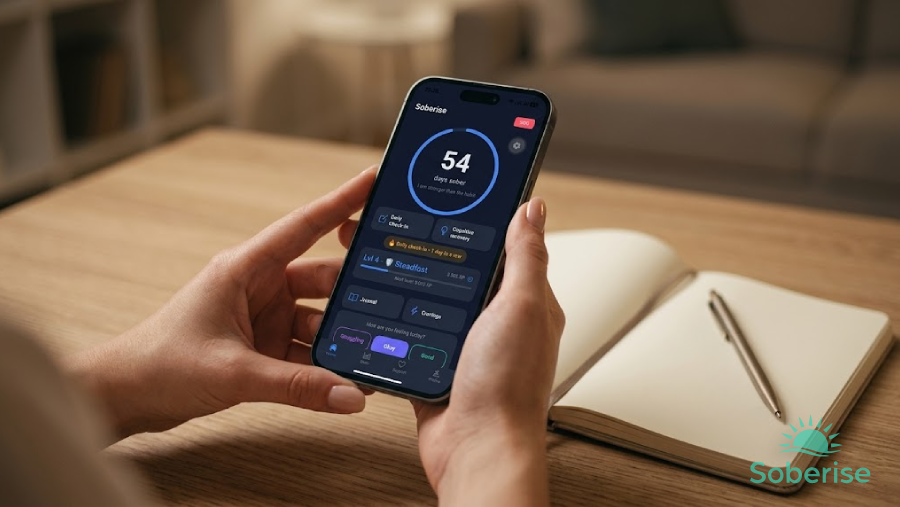
Through journaling, you can see progress even when it feels like nothing is changing. The number of anxious episodes decreases, sleep gradually returns. The app can remind you about water or HALT when you forget. After a week, reread your notes—and you’ll see how much you’ve already overcome.
- In the morning and evening, record your craving level and well-being
- Mark what helped to relieve tension
- Identify triggers: hunger, fatigue, quarrel, loneliness
Step 5: Support groups and counseling — not a camouflage for weakness
Holding on alone is the path of a hero, but it’s not always effective. Support groups like AA or online communities give you the feeling of “I’m not alone.” It’s a lifesaving feeling when it seems like everyone around is celebrating and you’re just surviving.
A conversation with a consultant or group opens up new tools: CBT techniques, rituals, practical advice. Don’t wait until things get really bad. You can reach out just to relieve tension, with no obligations. In the first week, this external resource can sometimes be critical: someone else’s experience can help you see a way out, even if it seems like there isn’t one.
6. Comparison: recovery resources — apps, support groups, therapy, self-help
Everyone chooses their own pace and method — the main thing is to have a choice. Below is a short comparison table that will really help you in your first week of sobriety.
| Parameter | Mobile sobriety apps | Support groups (AA, NA, etc.) | Individual therapy | Self-help (journal, exercises, information) |
|---|---|---|---|---|
| 24/7 availability | Yes, always at hand | Limited — according to meeting schedule | Depends on specialist’s schedule | Anytime you have time and energy |
| Anonymity | Full — you don’t have to reveal yourself | High, but depends on group format | Confidential, but there is contact with another person | Complete, one-on-one with yourself |
| Real-time support | Chats, notifications, quick tips | Live interaction with others, emotional support | Professional response, in-depth processing | Only your own motivation and self-control |
| Focus on physiology (electrolytes, glucose, sleep) | Symptom tracking, reminders for water, nutrition | Less focus on biochemistry, more on experience | May consider physical condition if therapist is experienced | Depends on your choice: you can keep a symptom diary |
| Cost | Often available free or freemium | Free or for voluntary donations | Noticeable payment for each session | Free, only desire and time needed |
| Sense of involvement | Feeling of community through stats and achievements | Live contact, people’s stories here and now | In-depth work on personal history | Most inner work, but minimal external support |
| Who it’s suitable for | For those who want structure and control, but without face-to-face contact | For those seeking the feeling “I’m not alone,” value live conversations | For those ready to invest in deep change with a professional | For those used to figuring things out themselves, enjoy writing or searching for information |
The first week without alcohol: what symptoms to expect and how long will it last?
The first week is a rollercoaster: insomnia, anxiety, headache, tremor, sweating, and sharp mood swings. Symptoms appear due to dehydration, electrolyte imbalance, and a drop in dopamine. All this starts within the first hours of abstinence. For most people, acute symptoms last 3–7 days, then it gets easier. Simple things help reduce discomfort: water with a pinch of salt, light food, rest, and having someone nearby who can support you.
How to get through the first days without alcohol if you constantly crave a drink?
Craving is not a “weakness,” but part of the brain’s adjustment: dopamine has dropped, the brain panics and demands the old “relief” pattern. The worst part is the first 15–20 minutes of a craving wave: it really feels like an attack. At this moment, CBT techniques, short physical exercises, a change of environment, or even a cold shower or a glass of water with lemon can help. If you don’t “feed” the craving, it fades on its own. Craving is like a wave—it hits, but always recedes.
Can you cope with withdrawal on your own, or do you need help?
It’s possible to cope on your own, but it depends on the severity of symptoms and your condition. If you have seizures, confusion, or very high blood pressure—this is a signal to seek medical help immediately (alcohol withdrawal syndrome). If symptoms are moderate—you can help yourself: water, electrolytes, rest, minimizing stress. Even at home, don’t be ashamed to ask for support—having someone nearby significantly reduces the risk of relapse.
What techniques or approaches are actually effective in the first week without alcohol?
The best results come from a combination: basic sleep hygiene, light foods for gut microbiota, pharmacy magnesium extracts (citrate or chelate), the HALT technique, and short meditations. Every meal is a chance to stabilize blood glucose, which directly reduces anxiety and the feeling of being “worn out.” The main thing is to help your brain and body right away, not wait for the perfect moment. Start small and don’t wait for inspiration: make yourself a bowl of soup, add magnesium, or just go outside for some air.
Is this approach suitable for those who have already had unsuccessful attempts to quit alcohol before?
Yes, and even more so: every attempt is new experience for the brain, not a “failure.” A relapse doesn’t erase your progress—it just sets you back a step, but the road is already familiar. If something didn’t work last time, change your tools or environment: try a different technique, add support, or join a group. It’s not about perfection, but about small steps you can actually take right now.
Твій лічильник тверезості — в кишені
Soberise — мобільний додаток для підтримки тверезості. Трекер днів, щоденний чекін, SOS-режим при тязі та коло підтримки.
Conclusion: you can get through the first week—and this is what real support looks like
When your brain asks for old habits and your body protests with every cell—it’s not your weakness, but withdrawal biochemistry. The most important thing you already know: withdrawal is not just about “hanging in there,” but about electrolyte balance, glucose levels, and supporting neurotransmitters. What works here are not slogans, but specific small decisions—from water with salt to CBT techniques.
- Set yourself a simple goal for 24 hours: mark it in a sobriety tracker or write it in your notes—this way your brain sees a short distance, not an endless marathon.
- Do one “electrolyte ritual” today: drink a glass of water with a pinch of salt or eat something salty—this helps reduce headache and tremor.
- Choose a calming action: a short breathing exercise, a walk, or meditation. Experience shows: even 10 minutes interrupts the wave of anxiety.
You’ve already started changing your body’s chemistry—and that means control is coming back into your hands.