- Why Alcoholism Treatment Without Consent Doesn’t Work: Facts and Myths
- How Addiction Develops: The Role of Motivation and Consent
- Consequences of Forced Treatment: Medical and Emotional Risks
- How to Support a Person at Home: A Practical Approach
- Step-by-Step Guide: How to Support a Loved One in Recovery
- Comparison: Approaches to Addiction Treatment — Their Effectiveness and Risks
- Frequently Asked Questions
- Conclusion: What to Do If a Loved One Refuses Treatment
Attention: This material is for informational purposes only and is intended for general support. It is not medical advice, does not provide diagnoses, and does not replace professional treatment. If you experience severe physical withdrawal symptoms, be sure to consult a doctor.
1. Why alcoholism treatment without consent doesn’t work: facts and myths
You already feel like a superhero fighting windmills: it seems like you’re doing everything right, but the situation at home only gets worse. Treating alcoholism without consent is not only ineffective, but also dangerous for relationships. Fact: over 80% of attempts to “save” a loved one by force end in relapse, aggression, or a complete loss of trust. Even if it seems that forcing is the only way, the brain and psyche work differently.
Why is everything so complicated? Alcohol addiction is not about a lack of willpower or being a “bad person.” It is a disorder of brain neuroplasticity, where alcohol withdrawal syndrome, alcohol-induced depression, and anxiety disorder push a person into a vicious cycle. Coercion does not break the addiction here, but breaks humanity. Instead of recovery, we get even greater resistance and the risk of worsening mental health.
Next, we will discuss why motivation is more important than control, which myths about “forced treatment” are still alive, and how to truly support your loved ones—without harmful advice and with maximum care.
2. How dependence is formed: the role of motivation and consent
Motivation: why inner desire is the key to change
When the brain gets used to a constant intake of alcohol, neuroplasticity works against healthy habits. Alcohol literally rewrites the pleasure circuits. External pressure at this moment only provokes defense. Alcohol withdrawal syndrome is not a myth: the body and brain can feel pain, anxiety, and aggression instead of gratitude for being “saved.”
Many families try to control the situation: they take away money, hide bottles, persuade the person to see a doctor. But this strategy rarely works. Without an internal “want,” even perfect conditions do not trigger the recovery process. Motivation is not just a word for psychologists. It is a specific neurochemical reaction: the brain’s dopamine system switches to survival mode when the decision is not one’s own.
In practice, change happens when a person decides to fight on their own. Motivational counseling programs help to find this personal desire, not just fulfill the demands of family. That is when therapy and support groups work best.
- Internal motivation reduces the risk of relapse by 2-3 times compared to coercion.
- Even minimal consent to treatment changes the outcomes – this is evident in real-life examples in codependent families.
- The first steps are the hardest. But after them, the brain begins to recover—neuroplasticity restores control over impulses.
Tip: Start with a personal conversation: don’t demand, but ask what your loved one is afraid of or what they truly want. This creates space for honesty—and often reduces resistance.
Psychological resistance: how coercion affects a person
Most people think that if you “force” someone—they will overcome themselves and quit drinking. But the brain reacts to coercion as to danger: defense mechanisms trigger aggression, isolation, or even denial of the problem. Often, forced treatment provokes a new round of anxiety disorder or worsens alcohol-induced depression.
Forced actions by the family (for example, involuntary intervention or secretly adding medication) not only do not work, but also destroy trust. The person feels a loss of control over their own life—which fuels the vicious cycle of addiction. It creates a sense that the whole world is against them, and alcohol is the only “ally.”
Supportive therapy and restoration of family dynamics yield a completely different result. When the family does not pressure but stands by, a person has a chance to independently choose their path to recovery. Research confirms: trust and dialogue are fundamental conditions for working with addiction (alcoholism, Wikipedia).
- Coercion does not heal – it increases resistance and the risk of relapse.
- Anxiety disorder and alcoholic depression often worsen after attempts to control a person.
- Restoring family dynamics is a process, not a one-time conversation.
3. Consequences of forced treatment: medical and emotional risks
Violation of rights: ethical aspects
Forced addiction treatment without consent is not just an emotional shock for a person. It is also a direct violation of the right to personal autonomy. Instead of the desired “quick victory,” there arises a sense of devaluation and loss of control. Most people who are “rescued” by force do not become grateful—they simply lose trust in their loved ones.
On the biological level, coercion triggers stress: cortisol rises sharply, anxiety disorder and symptoms of alcohol depression worsen. This not only complicates alcohol withdrawal syndrome—it adds the risk of relapse, panic, insomnia, and sometimes even psychosis.
Attempts to “slip in” medications or force procedures without consent can cause acute side effects—from seizures to aggression. Separately, there is biochemical breakdown: when the brain suddenly loses dopamine and there is no backup.
- Exacerbation of anxiety disorder and depression
- Risk of acute withdrawal with seizures and psychosis
- Loss of trust in family and medical professionals
- Human rights violations
Why it works: When the decision to undergo treatment is made voluntarily, the brain gets a chance for neuroplasticity: new behavioral strategies are formed, not just defensive reactions.
Loss of trust in the family: what happens to relationships
The family often expects that “coding” or other forms of coercion will force a person to change. But in practice, the opposite happens: coercion only destroys relationships. The person withdraws, hides symptoms, lies about relapses. Every attempt at control adds another layer of resentment or anger. The family dynamic breaks down, and instead of support, mutual suspicion arises.
The brain of a dependent person perceives pressure as a threat. The “fight or flight” mode is activated—a classic stress response. As a result, there is an even greater desire for isolation and sabotage of any joint decisions.
Many people think: it’s enough to simply not buy alcohol for the home. But even if you “remove the bottle,” without supportive therapy the brain won’t learn to cope with anxiety or depression. Sheer willpower only increases the risk of relapse, and with a more acute withdrawal syndrome.
Research and practice show: if the family learns not to rescue, but to create space for independent choice, the chance of recovery is much higher. Open conversations, motivational counseling, and direct support work here. Not manipulation or coercion.
If you see that a loved one is experiencing severe withdrawal, offer support instead of pressure: make an action plan together, leave a reliable contact, share information about the first week without alcoholThis is not a quick process. But this is exactly how conditions for real change are created.
4. How to support a person at home: a practical approach
Respect for choice: how to talk about the problem without pressure
Alcohol dependence is often accompanied by a defense mechanism—denial. If you apply pressure, the brain perceives it as an attack and switches to “defense mode.” During a conversation about dependence, it is important to keep the focus on your own feelings rather than accusations. This is not weakness, but simple neurochemistry: criticism triggers the production of cortisol and intensifies anxiety disorder.
The “I-message” technique works well. Instead of phrases like “You are ruining your life,” say: “I worry when I see you upset.” This creates a safe space for dialogue, not for arguments. Family therapy research confirms: clearly separating responsibility reduces the risk of emotional outbursts and gives a person a chance to listen, not defend themselves.
Another approach is motivational interviewing. Here, the main thing is not to persuade, but to show respect for the person’s choice. An open-ended question like “What would you like to change in your life?” works better than ultimatums. A person begins to look for motivation within themselves, rather than fighting against external pressure.
Typical mistake: Many people try to “break” the dependent person with arguments or scandals, hoping to awaken their conscience. But a brain under stress blocks any openness to change. Better – try to talk when everyone is calm, briefly and with respect for their right to choose.
Creating a safe space: what to change at home
Support is not about control. There is no need to remove all the glasses or declare prohibition. Such tactics provoke resistance and destroy trust. Instead, small steps that change the atmosphere at home are important.
Start with a space for restoring family dynamics. Dinner without gadgets, a walk together, or watching a movie—these moments create new associations in the brain. The brain’s neuroplasticity allows for the creation of new “pleasure pathways” that are not related to alcohol consumption.
Another practical step is supportive therapy, even if it’s just regular conversations with a loved one or a group. Participating together in groups for relatives of addicts (for example, codependency programs) helps not only to understand oneself, but also to learn how to respond to alcohol withdrawal syndrome and manifestations of alcoholic depression without mutual resentment. Wikipedia writes about this in more detail.
Here is a short list of actions that really work:
- Choose moments for conversations when the atmosphere is calm.
- Suggest joint activities that are not related to alcohol.
- Provide a safe space at home—without judgment or pressure.
- Get involved in supportive programs for families.
- Regularly remind: you are ready to help, but the choice is up to the person.
This is how you create a foundation on which a person can begin to recover on their own. It’s not about “saving,” but about changing the dynamics of the relationship and giving a chance for a healthy choice.
5. Step-by-step guide: how to support a loved one in recovery
Step 1: Define your own boundaries of assistance
The main mistake is trying to control everything. When you take responsibility for someone else’s sobriety, your brain triggers a cycle of anxiety and exhaustion. Not only does this not work, but it also intensifies alcohol withdrawal symptoms in the addicted person: they feel even more pressure.
The solution is to define what you are actually responsible for. Your boundaries are not a refusal to support, but a way to take care of your own mental health. For example: “I am here when you decide to talk, but I am not hiding alcohol, I am not calling the clinic instead of you.”
It may seem like indifference. But it is precisely this approach that creates space for restoring family dynamics: a person feels that the decision is their area of responsibility.
Check yourself: If you often feel guilty for every breakdown of a loved one, your boundaries are probably blurred.
Step 2: Find resources for yourself and your loved one (Soberise, support groups, therapy)
Sobriety is not a marathon alone. Research shows that families who seek outside support are less likely to fall into the trap of codependency.
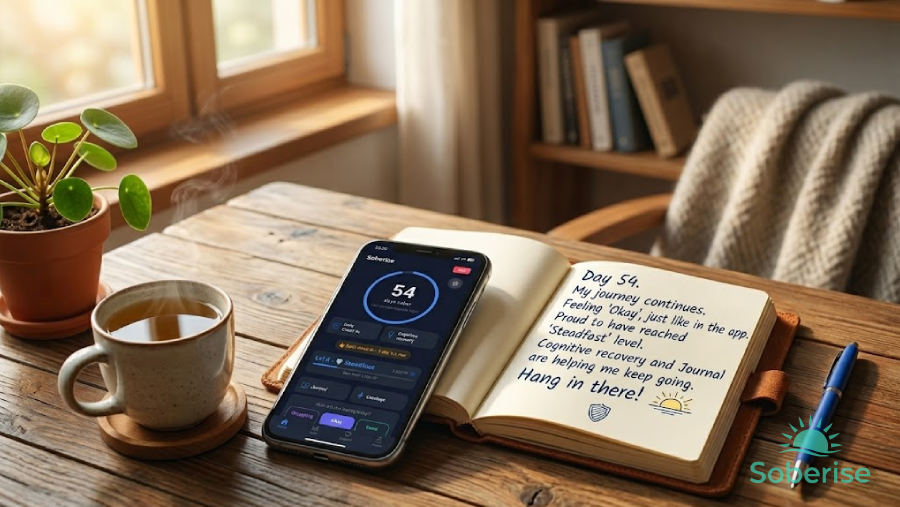
You can connect a mobile app for sobriety tracking – for example, Soberise. Or find a codependency group where you can talk and gain experience from others.
AA groups, NA, or online therapy are not about “breaking” addiction with someone else’s hands. It’s about learning new responses that reduce the risk of alcohol-related depression and anxiety disorders in all family members.
List of resources to get started:
- mobile sobriety tracker
- support groups for co-dependents
- motivational counseling with a psychologist
- educational materials about brain neuroplasticity
Your task is not to “force,” but to provide tools and space for personal choice.
Step 3: Open conversation without accusations
Most conversations about addiction end in arguments. The reason is that accusations trigger defense and resistance at the level of the nervous system. The brain perceives pressure as danger and activates the “fight or flight” response.
Nonviolent communication approach: express your feelings, not judgments. Instead of “You’re drinking again” – “I feel worried when I see you getting tired and seeking relief in alcohol.”
The conversation should sound like an invitation, not an ultimatum. An open question: “What would you like to try to make things easier?” gives the person the right to choose for themselves.
Don’t expect instant results. Changing family dynamics is a marathon, not a sprint.
Step 4: Support in difficult moments (CBT techniques, HALT)
During an outbreak of anxiety or aggression, the brain easily slips into the old pattern—using. Here, simple techniques from the CBT arsenal work: tracking the thoughts that trigger cravings. For example, write in a notebook: “Right now I feel anger, not the need to drink.”
HALT Method – check: are you not hungry, not angry, not lonely, or not tired? 80% of relapses happen at these times. It’s not about weakness, but about basic physiology.
Your role is not to save, but to be there when the wave passes. Offer a walk, a warm tea, or just sit quietly nearby. This kind of support reduces the level of anxiety disorder and gives the brain a chance to learn new responses through neuroplasticity.
Step 5: Tracking progress together
It may seem like there are no changes. But even small steps are already progress. Mark alcohol-free days together, as well as changes in mood or well-being.
It is important for the brain to see the signal: there is progress, even if it is small. The real benefit is the formation of new habits, which are reinforced through repetition.
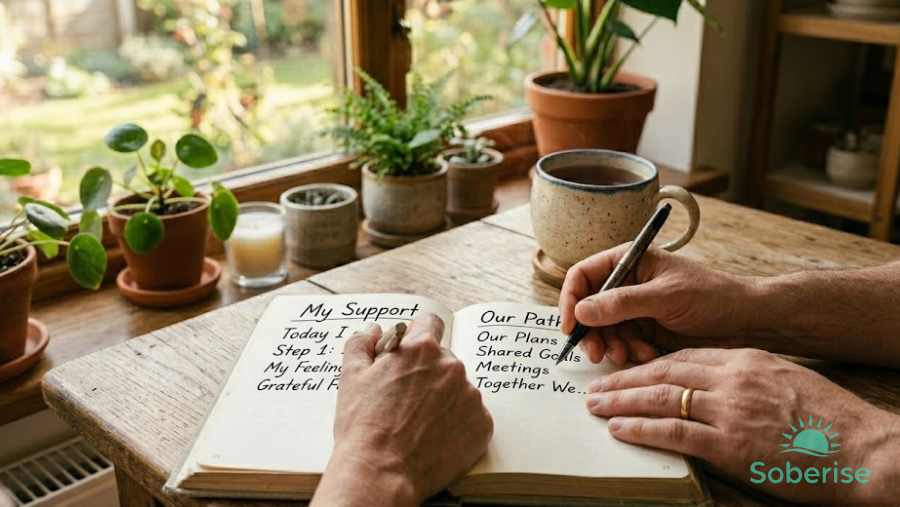
Try keeping a shared journal: each evening, write 2-3 sentences about what went well or what was difficult. This is an effective way to stay focused on recovery, rather than on control or failures.
Don’t rush or judge. Every day without a breakdown is already a victory for the whole family.
6. Comparison: approaches to addiction treatment – their effectiveness and risks
There is no perfect universal solution. Each path has its own advantages and pitfalls. See an honest comparison of the main approaches:
| Parameter | Forced treatment (without consent) | Voluntary participation in support groups (AA, NA) | Motivational counseling and family support at home |
|---|---|---|---|
| Motivation for sobriety | Minimal. Resistance often arises, unwillingness to acknowledge the problem. | Gradually formed through shared experience and support from other participants. | Can be strengthened through dialogue, self-awareness, and the example of loved ones. |
| Risks to mental health | High: depression, anxiety may worsen, aggression may appear. | Low: an atmosphere of acceptance reduces feelings of shame and isolation. | Risk level depends on the family situation. If the support is constructive, the risk is minimal. |
| Impact on alcohol withdrawal syndrome | May worsen. No preparation for crisis states. | Symptoms can be discussed, advice or support can be received. | There is an opportunity to respond quickly if the family knows the symptoms and actions. |
| Brain changes (neuroplasticity) | The brain resists change. Often returns to the old model after the course. | Slow but steady neuroplasticity through regular self-work. | Conditions for new habits and reactions appear in a familiar environment. |
| Restoration of family dynamics | Worsens: distance increases, distrust appears. | Improves if relatives also join groups for codependents. | Opportunity to learn new communication models, to stop being a “rescuer.” |
| Long-term effectiveness | Low. High risk of relapse after a forced course. | Medium or high with regular participation. Time is needed. | Depends on consistency, willingness to change together, and outside support. |
| Who it is suitable for | Only in cases of direct threat to life or health, if there are no other options. | For those willing to try the community, even if there are doubts or feelings of shame. | For families who want to support, not control — and are also ready to change the dynamic. |
Is it really possible to cure an alcoholic without their consent?
No, real and lasting change is impossible without the person’s own desire. Forced treatment only causes more resistance, not sobriety. Motivation appears only when a person chooses and feels responsibility themselves. Even the best methods have only a short-term effect if there is no inner agreement. The best approach is to create an atmosphere in which your loved one wants to try recovery themselves, for example, through motivational counseling.
What are the dangers of treating alcoholism without the patient’s knowledge?
Treatment without consent is a risk for both mental health and physical health. Acute reactions may occur: alcohol withdrawal syndrome, aggression, deep alcoholic depression, or even anxiety disorder. Trying to secretly add medications or supplements is especially dangerous—it can lead to complications and loss of trust. It’s better to discuss everything openly and offer supportive therapy than to act in secret.
How to help if the person refuses treatment?
Your strength lies in changing the home dynamic, not in trying to forcefully save someone. Show care, but avoid control. Short conversations without blame, resources for codependents, joint support groups—these work. Restoring family dynamics often brings results even when hope seems faint. Start with yourself: stabilize your own emotional state to be a support, not another trigger.
Are there free ways to get support for alcoholism?
Yes, and they work, especially at the start. AA or NA groups, as well as communities for codependents, are free and available in almost every city. Online groups, forums, and informational resources can also provide support in a crisis. But these formats are not always enough: they often initiate changes in the family, even if the person with addiction is not ready to seek help.
Who is home support in recovery suitable for?
Home support is suitable for those who are ready to work on relationships, not just fight the symptom. It is most effective where there is still some trust and willingness to learn new things in the family—even if it hurts and is scary. If the situation is critical or your loved one’s condition is dangerous, you should seek professional help. But in most cases, it is the change in family dynamics and support for brain neuroplasticity that trigger real change.
Твій лічильник тверезості — в кишені
Soberise — мобільний додаток для підтримки тверезості. Трекер днів, щоденний чекін, SOS-режим при тязі та коло підтримки.
Conclusion: what to do if your loved one does not want treatment
The key takeaway from this conversation: coercion does not heal. But you really can influence—through empathy, boundaries, and changes in your own behavior. Motivational counseling, restoring family dynamics, and supportive therapy trigger neuroplasticity processes in the person’s brain—even when it seems like nothing is changing.
- Say out loud what you feel. Write a short message or say: “I’m worried about you. I’m here if you want to talk.” This is the first step to changing the dynamic.
- Learn the HALT technique and apply it to yourself: are you hungry, angry, lonely, or tired right now? Recovery starts with self-care, even if it seems like it’s not about you.
- Track your own reactions—try the emotion tracker in the Soberise app or any other method convenient for you. This will help you notice how your support affects the atmosphere at home.
Even if changes are not yet visible—you have already shifted the heaviest stone.