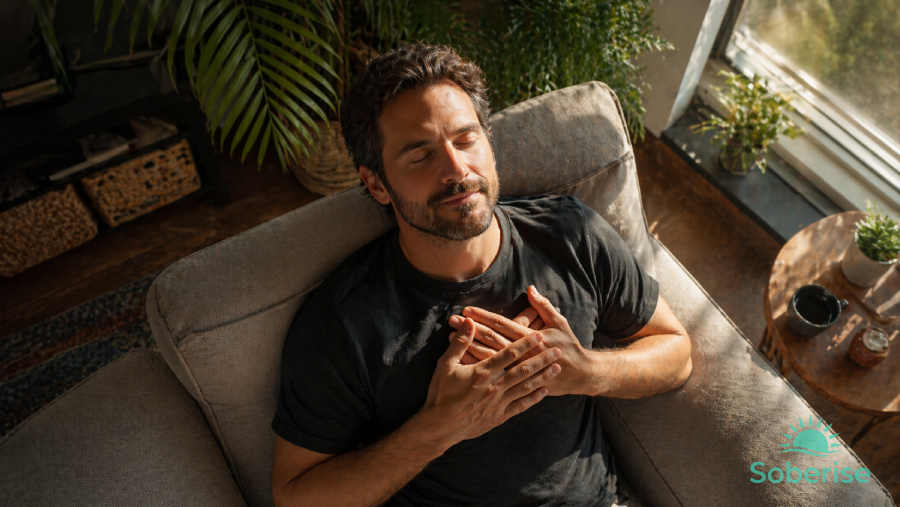
- Why the brain instantly reacts to cravings: facts about stress and breathing
- How stress triggers craving cycles: the role of the autonomic nervous system
- The biochemistry of breathing: how a simple action changes the state of the brain
- TOP-3 proven breathing techniques for recovery
- Step-by-step guide: how to use breathing techniques during cravings
- Comparison: breathing techniques for different situations
- Frequently asked questions
- Conclusion: breathing as a quick self-help tool in a difficult moment
Attention:This material is for informational purposes only and is intended for general support. It is not medical advice, does not provide diagnoses, and does not replace professional treatment. If you experience severe physical withdrawal symptoms, be sure to consult a doctor.
1. Why the brain instantly reacts to cravings: facts about stress and breathing
When the brain screams for alcohol, it feels like the whole body goes into emergency mode: breathing becomes shallow, there’s tightness in the chest, and thoughts circle around a single idea. Here’s the thing: even two minutes of conscious breathing can literally switch off anxiety and reduce cravings — and this is no longer magic, but physiology[1]. Breathing techniques for overcoming cravings work not like a soothing fairy tale, but as a switch for your nervous system.
Why is this so important? During stress, the body instantly increases levels of cortisol and adrenaline, heart rate rises, and shallow breathing does not provide enough oxygenation to the blood[2]. It is at this moment that the vagus nerve is activated—your internal “anti-stress guardian.” Controlled breathing literally signals the brain: “The danger has passed,” and activates the parasympathetic nervous system, which reduces anxiety not only in your thoughts but also on a physical level.
Next — specifics: how this mechanism works and why even the simplest breathing exercises truly help in life when it feels like you’re about to snap. You won’t get a magic pill, but real tools that deliver results in just two minutes. No supernatural powers or secret techniques — only what actually works.

2. How stress triggers craving cycles: the role of the autonomic nervous system
Anxiety: how breathing affects cortisol levels
When stress hits suddenly, the body switches to alert mode. The parasympathetic and sympathetic nervous systems start to “fight” each other. The heart beats faster, breathing becomes shallow, and cortisol levels spike. This is not weakness—the body is preparing for “fight or flight” according to all the laws of physiology.
At this moment, your brain throws out the idea: “Drink alcohol = survive.” Sound familiar? Most tips about “taking a deep breath” in such moments work like a band-aid on a broken bone. Automatic breathing is shallow, there’s little oxygen, blood oxygenation drops. That’s why even a short breathing exercise that activates the vagus nerve literally switches off the alarm signal.
Research shows: deliberate slow breathing for 2–4 minutes lowers cortisol levels by 15–20%. This isn’t magic — it’s simple biochemistry. Just a slight change in your inhale-exhale rhythm sends a clear signal to the brain: “the danger has passed.” That’s why, during a sudden craving, the working mechanism looks like this:
- 3–4 slow belly breaths (through the nose)
- Exhale is twice as long as inhale
- The pause between exhalation and the next inhalation is 1–2 seconds
Already by the third breath, the tension in your chest eases. This is not self-suggestion — it is a decrease in adrenaline levels and stabilization of heart rate.
Tip: If you are in the office or on public transport and can’t do a full breathing practice, try micro-pauses: hold your breath for 2 seconds after exhaling. This short “reset” hacks the anxiety loop even in a stressful environment.
Willpower Block: Why the Brain Gets “Stuck” on Desire
Many people think: when a craving hits, you just need to muster your willpower. But during stress, your autonomic system blocks access to “logic”—the prefrontal cortex, which is responsible for decision-making, literally shuts down. It’s like you’re on autopilot: your brain gets stuck on a single scenario.
Shallow breathing only reinforces this cycle. When there isn’t enough oxygen, the brain can’t switch to another thought. Blood oxygenation drops—and the urge to use seems like the only way out. Even if you understand it’s an illusion, the body has already activated the old pattern.
Here’s the thing: simple breathing techniques become your lifeline. They activate the vagus nerve and give you back control. This isn’t about willpower, it’s about a physiological switch. Experience shows: just 4–5 conscious cycles of slow breathing are enough—the adrenaline level drops, and space for choice appears. Not instantly, but faster than your brain can “negotiate” with itself.
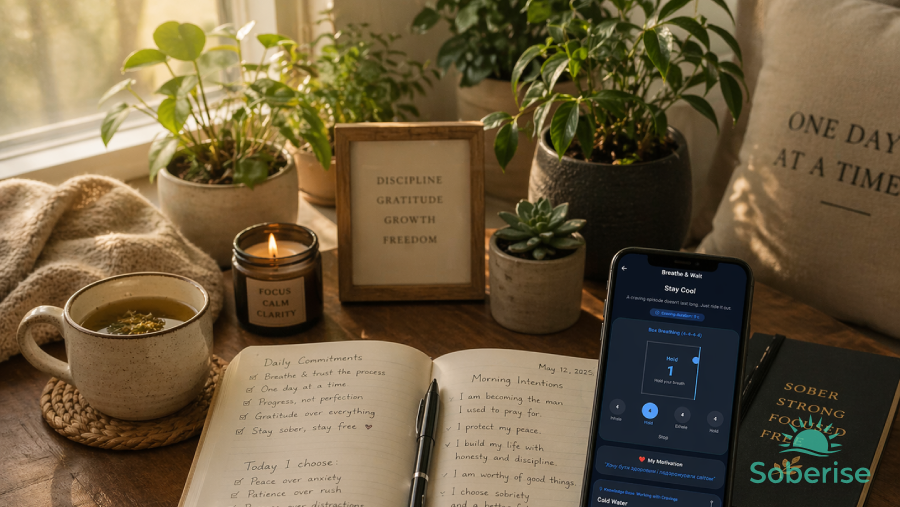
3. Biochemistry of breathing: how a simple action changes the state of the brain
After a deep breath: how the activity of the sympathetic nervous system changes
Try taking a slow breath now — and you’ll feel the tension begin to ease by the second minute.
Deep breathing switches you to a different mode — the parasympathetic nervous system is activated. It slows down chemical anxiety: cortisol levels drop, the heart rate slows, and the vagus nerve “replies”: “Everything is under control.” That’s why even a simple breathing practice really reduces cravings — not only psychologically, but also on a biochemical level. Research shows: after just 2–3 minutes of controlled breathing, blood oxygenation increases, and the brain gets that very “pause” to avoid rushing headlong after the first impulsive thought (the vagus nerve).
Craving is like a wave—it comes and goes. And most people think, “I need to distract myself.” In reality, breathing is your shortcut to changing your neurochemistry. It doesn’t matter if you’re at work or at home near the fridge: the brain responds to oxygen instantly. After just one minute of deep breathing, your heart rate drops by 5–10 beats, and adrenaline recedes.
Why it works: Breathing practices activate the vagus nerve, which turns off the brain’s “emergency” mode and restores your sense of control.
Here’s the thing: trying to “suppress” craving is like holding a door shut against a storm. But letting in the air and giving your brain a new signal through breathing—that’s a real change of state. If you want to understand why support at home should start with simple bodily rituals rather than coercion—check out the material on real support approaches.
- Deep inhale through the nose for 4 seconds — hold for 2 — slow exhale through the mouth for 6.
- Repeat the cycle 5 times — and you will feel your body relax.
- Make sure your shoulders drop and your belly rises as you inhale — this is your signal for the vagus nerve.
4. TOP-3 proven breathing techniques for recovery
Box breathing technique: when quick stabilization is needed
Box breathing is not just an Instagram meditation, but a real way to influence adrenaline and cortisol levels in just 2 minutes. The essence is simple: inhale — 4 seconds, hold — 4, exhale — 4, pause — 4. And so — four times in a cycle. The brain immediately receives a clear signal: “Anxiety is under control.” Why does it work? The slow pause after inhaling and exhaling activates the parasympathetic nervous system, which literally extinguishes the stress response.
This technique is especially helpful when the urge hits suddenly: a meeting in the office, a conversation with your boss, a jolt in public transport. On the outside, you appear calm; on the inside, there’s less panic and more resources. Blood oxygenation increases, heart rate gradually returns to normal, and the feeling of tension in your chest subsides.
Most people think they need to “breathe deeply,” but it is the rhythmic tempo of box breathing that creates a grounding effect. This gives the vagus nerve a clear pattern—and it starts to “slow down” stress impulses. Just 2 minutes of this practice can really reduce the risk of relapse—proven not only by research, but also by dozens of stories from those who have gone through the first week without alcohol.
- Inhale — 4 seconds
- Pause — 4 seconds
- Exhale — 4 seconds
- Pause — 4 seconds
Typical mistake: Rushing the exhale or holding your breath, trying to “calm down quickly.” In reality, a slow pace is the key to activating the vagus nerve. If you breathe in a shallow or jerky way, there will be almost no effect.
4-7-8 Technique: for gentle calming
This approach is especially suitable for nighttime anxiety and the evening desire to “switch off your mind.” The 4-7-8 technique: inhale for 4 seconds, hold for 7, slow exhale for 8. This rhythm shifts the balance towards the parasympathetic system—and the body begins to release tension.
How does it work on a biological level? Slow exhalation lowers cortisol levels. A long pause between inhalation and exhalation “forces” the brain to switch from anxiety mode to recovery. It’s like hitting the brakes on anxious thoughts—even if the brain still offers “quick relief” in a bottle for a few more minutes.
After a hard day, when your hands reach for the fridge, just two minutes of 4-7-8 breathing—and you already feel it: your pulse slows down, there’s less noise in your head. You don’t have to expect magical changes—but it’s definitely worth allowing yourself this ritual.
Diaphragmatic breathing: how deep breathing works
Diaphragmatic breathing is not just “breathing with your belly,” but a way to increase blood oxygenation, reduce heart rate, and shift attention from anxiety to bodily sensations. This is where the vagus nerve works at full capacity: it receives a signal of safety, and the brain begins to lower the level of stress hormones.
Shallow breathing only intensifies anxiety, promotes the accumulation of adrenaline, and makes cravings even more persistent. But as soon as you take a few conscious diaphragmatic breaths, your body responds with relaxation, and your hands are no longer so shaky.
This process is reminiscent of a “reset”—especially in the morning after a sleepless night, when the brain is foggy and craves quick relief. Deep breathing won’t replace sleep, but it does restore at least some sense of control. You can use a favorite scent as an “anchor” for this practice—for example, vanilla or mint in a hand cream. Natural mint oil not only refreshes but also enhances the calming effect by stimulating skin receptors.
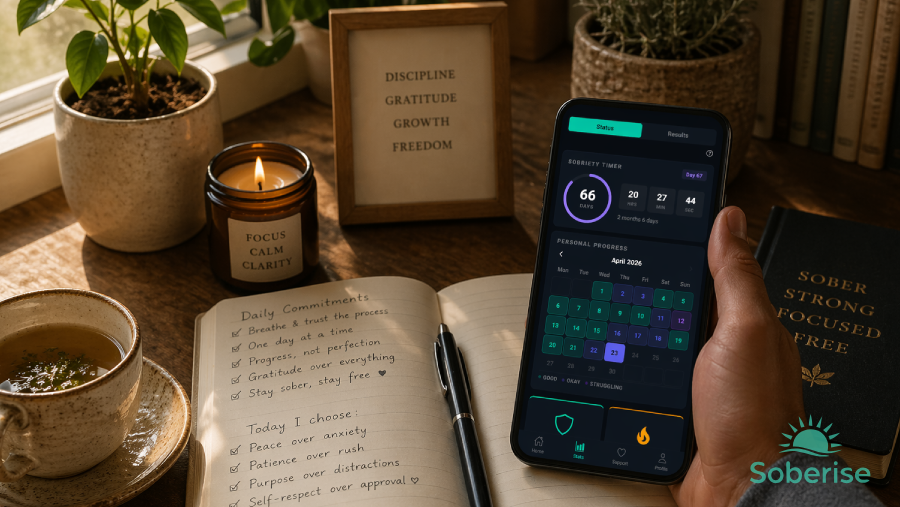
5. Step-by-step guide: how to apply breathing techniques during deadlifts
Step 1: Identify the trigger and find a safe place
Craving never arises for no reason. It’s a reaction to a specific trigger: stress, a smell, even a certain location. If you feel tension in your chest or shallow breathing, the first step is to acknowledge: “Okay, this is a craving.” This is not a failure, but a signal from your nervous system.
Anxiety loves public places: the office, the store, even the kitchen at home. Finding a safe space isn’t always about perfect silence, but at least about 90 seconds of your own space. Even a bathroom stall or a balcony will do. The main thing is that no one distracts you.
It often seems that escape is weakness. In fact, it is the activation of the parasympathetic nervous system: you lower your adrenaline levels when you leave the trigger zone. Research shows that brief solitude gives the brain space to “reset” the response cycle.
- Feel that you are safe right now, even if it’s just for a few minutes.
- Don’t try to “hold out on willpower” — it’s not about character, it’s about neurochemistry.
Step 2: Focus on bodily sensations
Shallow breathing is a typical companion of anxiety. In such moments, it feels like you can’t take a full breath, your heart beats faster. This is not an illusion: cortisol levels rise, your blood becomes less saturated with oxygen, and your brain “screams” even more about danger.
The main thing now is to shift your focus from your thoughts to your body. To begin, simply notice how you are sitting or standing. Grounding includes even the smallest details, like the feeling of fabric under your palms or the pressure of shoes beneath your feet. This returns control from the chaos of thoughts to something concrete: “I am here, I am breathing, I am feeling.”
You can gently press your fingers on your collarbones — this activates the vagus nerve. Or rub your palms together if you need to focus and release excess energy.
Check yourself: If in 10 seconds you can clearly describe the sensations in your hands or feet — you’re already halfway to reducing tension.
Step 3: Choose one technique and monitor your breathing
Choosing a technique is not about the “perfect” option. What matters is that you can do it right here and now. The simplest way to start is box breathing (count 4-4-4-4). Four seconds inhale, four hold, four exhale, four pause. Repeat the cycle at least three times.
Another option is breathing with an emphasis on a slow exhale. For example, inhale for 3, exhale for 6. It is the long exhale that activates the parasympathetic system and lowers heart rate. This is physiology, not magic: during this time, adrenaline levels actually decrease.
If you have natural lavender oil nearby, inhale its scent as you breathe in. The oil contains linalool, which enhances the calming effect through your olfactory receptors. It’s a small thing, but for many people, the scent helps keep their focus on their breathing.
- Make sure your shoulders don’t rise — your breathing should be diaphragmatic.
- Do 6–8 cycles, don’t rush. Better slow than deep.
Step 4: Give yourself 2 minutes – measure the changes
Two minutes is not just a psychological trick. It is within this time that you can notice a decrease in shallow breathing, pulse, and chest tension. Studies show that after just 120 seconds of regular diaphragmatic breathing, cortisol levels drop by 10–15% (PubMed).
Don’t stop, even if it seems like nothing has changed after the first cycle. Sometimes the body slows down its response—especially if you’ve been ignoring signs of fatigue or anxiety for a long time.
For clarity, you can set a timer on your phone. Measure your pulse on your wrist—even 5–10 beats less is already a victory of the body over the craving.
Step 5: Rate your craving on the scale and record the result
The last step is not just about analysis. When you rate your urge on a scale from 1 to 10, you regain control over your state. The brain receives a new pattern: “I can influence this.” Just write the number down in your notes or an app.
It’s also about biochemistry. When you notice changes, your brain releases a small dose of dopamine—for the feeling of control. And yes, it’s a small but honest bonus to your recovery piggy bank.
Even a regular notebook helps in this process, but some choose branded notepads from a brand they trust.
- Add a few words: what exactly worked, what felt more difficult.
- This ritual is your personal tracker, not a report for someone else.
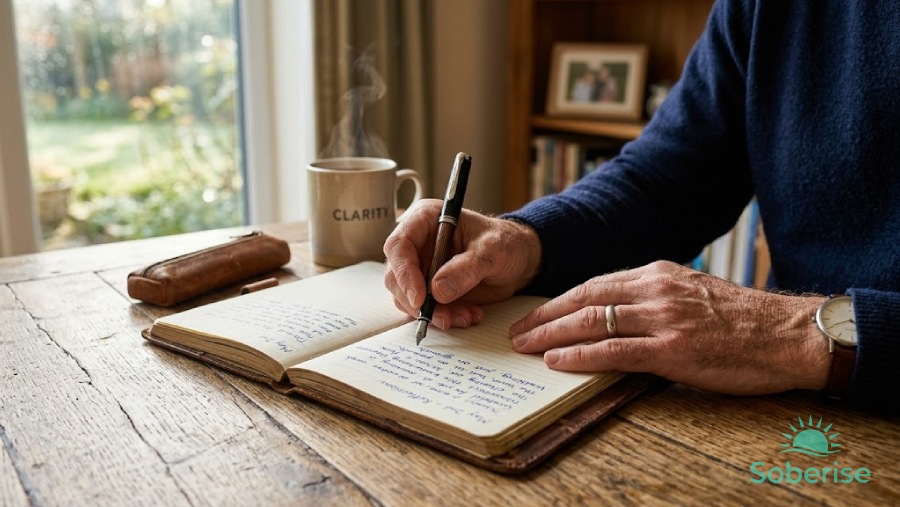
6. Comparison: breathing techniques for different situations
The same breathing practice can work very differently depending on where and when you use it. Here is a short table for quick selection for a specific moment.
| Parameter | Box breathing | Extended exhale (4-7-8) | Attention switching (Breathing with counting) |
|---|---|---|---|
| Where to use | Office, public transport, meeting | At home, before sleep, after stress | Anywhere, even during a conversation |
| How it affects the vagus nerve | Rhythm activates the parasympathetic system, lowers cortisol levels | Increases blood oxygenation, slows heart rate | Shifts attention from thoughts to sensations, lowers adrenaline levels |
| Duration of effect | 2–3 minutes for noticeable calming | 1–2 minutes for gentle relaxation | Quick effect, hold until it passes |
| Physical sensations after practice | Stable breathing, reduced chest tension | Feeling of warmth in the body, lightness in the head | Sense of control over the situation, fewer chaotic thoughts |
| What to do if you’re suddenly overwhelmed | Visualize a square and breathe along it—even during a meeting | Exhale slower than you inhale—and within a minute your brain “lets go” | Count your breaths up to 10—it grounds you, even if your heart is racing |
| Who it’s suitable for | For those who often find themselves in stressful social situations and want to remain unnoticed | For those who feel tension after work and are looking for a “reset” at home | For those who don’t like complicated techniques and want a simple tool always at hand |
Which breathing techniques are best for quickly calming down during cravings?
Box breathing often becomes a favorite for moments when your heart is “racing” and your brain is screaming for alcohol. It activates the vagus nerve in just 2-3 cycles, lowers cortisol, and stabilizes the nervous system. Try techniques with a clear rhythm—they work even if you’re at work or around people.
Do breathing exercises help with anxiety and internal tension?
Breathing with an emphasis on a slow exhale literally switches on the parasympathetic system, reducing adrenaline levels. No magic—just simple physiology: oxygenation and heart rate regulation. If anxiety tightens your chest, do 5 minutes of a technique with a long exhale, not just a “deep inhale.”
How long does it take for a breathing technique to affect stress?
For most people, the first physical changes appear within 60-120 seconds—the heart slows down, breathing evens out. It really works: even a short ritual signals the brain “you are safe.” For a lasting effect, repeat the technique several times a day, especially before a difficult moment.
Can I use these techniques if I have respiratory system problems?
If you have chronic lung diseases or breathing restrictions, choose gentle practices without breath-holding or excessive tension. Light rhythmic inhales and exhales, without hyperventilation, also activate the vagus nerve. If you’re unsure—start with the simplest pattern and monitor how you feel.
How do I choose a breathing technique for my specific situation?
Focus on your sensations: if it’s a panic craving and tension—a short, structured technique like Box breathing. If it’s evening stress and you can’t fall asleep—lengthen your exhale and focus on relaxing your body. Don’t overcomplicate: one simple pattern you can actually do here and now is always better than a perfect one you’ll start “tomorrow.”
Твій лічильник тверезості — в кишені
Soberise — мобільний додаток для підтримки тверезості. Трекер днів, щоденний чекін, SOS-режим при тязі та коло підтримки.
Conclusion: breathing as a quick self-help tool in a difficult moment
The most pleasant discovery: even when it seems like the craving is stronger than anything—your brain responds to a simple physiological action. The Box breathing technique doesn’t just “distract,” it actually activates the parasympathetic system via the vagus nerve, lowers cortisol, and evens out your heart rate. This isn’t magic—it’s your new skill of self-control that works even in the most stressful moments.
- If you feel tension or anxiety—pause and do five cycles of Box breathing, noting how your body responds from the very first round.
- Find something small for tactile grounding (for example, a stress ball)—combine it with breathing for faster calming.
- Set a short reminder on your phone for the evening to do another 2-minute breathing practice for no reason—let it become your little victory ritual.
Now you have a tool you can turn on at any moment—and this is your real autonomy, even when your brain is acting up.