- Why holidays without alcohol seem so difficult: a scientific perspective
- Social isolation and the feeling of being an “outcast”: the psychology of alcohol-free celebrations
- Why the craving for alcohol intensifies during holidays: the anatomy of triggers
- How sobriety affects the perception of joy and self-awareness in a group
- Step-by-step guide: how to stay alcohol-free at a celebration and remain comfortable
- Comparison: key sobriety strategies for holidays
- Frequently asked questions
- Conclusion: how to celebrate without alcohol and not lose self-confidence
ATTENTION: This material is for informational purposes only and is intended for general support. It is not medical advice, does not provide diagnoses, and does not replace professional treatment. If you experience severe physical withdrawal symptoms, be sure to consult a doctor or qualified medical professional.
1. Why holidays without alcohol seem so difficult: a scientific perspective
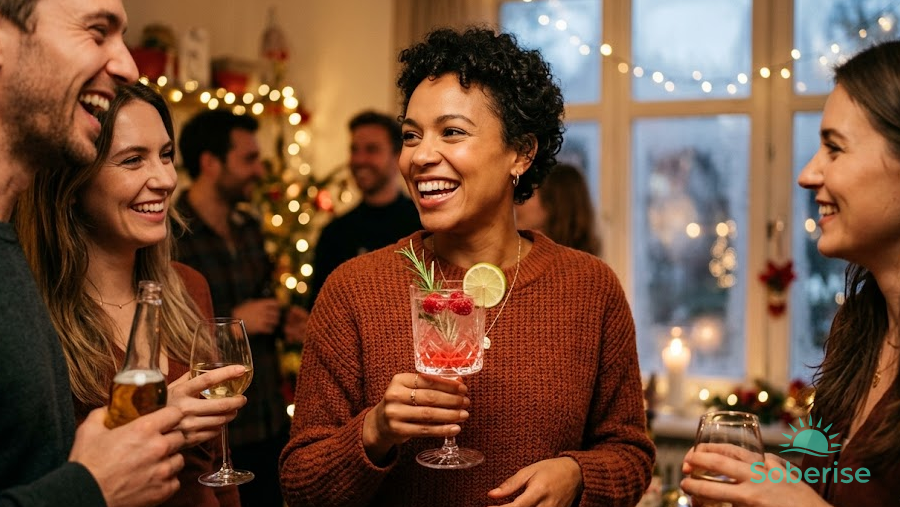
You are not weird — it’s just that your nervous system hasn’t yet gotten used to celebrating without alcohol, and that’s what causes discomfort, not sobriety itself. Alcohol-free celebrations seem difficult not because you “don’t fit in.” When everyone around is raising their glasses, your brain triggers the mirror neuron effect: it picks up on the mood of those around you and expects a familiar dopamine wave.[1]. But instead, you get a dopamine crash — a sharp drop that your brain perceives as a signal of anxiety.
It is social pressure and the stereotype “holiday = alcohol” that create a sense of isolation. This is not about willpower or your character. It’s about habit: for years, the ritual of celebration was accompanied by alcohol, and now even the smell or sound of an opened bottle triggers a conditioned reflex.[2]The body does not react to the absence of alcohol, but to the break from a familiar ritual. Without preparation, this mechanism intensifies anxiety and a burning sensation in the stomach.
Next, you will learn why the feeling of isolation seems especially acute during the holidays, how triggers work, and which real strategies help not just to “survive,” but to feel like you belong without alcohol.
2. Social isolation and the feeling of being an “outcast”: the psychology of celebrations without alcohol
Feeling excluded: why it hurts so much to be “different”
Social pressure at a celebration works not through anger or alienation, but through biology. When those around you raise their glasses, your brain catches the signal: “you are not with us.” This is due to the so-called mirror neuron effect—they are the ones that trigger the echo of the group’s emotions. It doesn’t matter how many times you’ve convinced yourself that “you can celebrate differently”: if the reflexes kick in, you feel a burning sensation in your stomach and acute anxiety. This isn’t about weakness of character—it’s your nervous system in emergency alert mode.
It often seems that refusing a drink automatically puts you outside the group. But the reason isn’t just the absence of alcohol in your hand. At the core of this is a dopamine pit that forms after prolonged use: the brain stops receiving “social rewards” without a chemical boost.[3]When others celebrate, their dopamine levels spike along with the alcohol ritual. For you, this mechanism hasn’t adjusted yet, so the feeling of isolation seems unbearable.
Paradox: the most painful thing is not the alcohol itself, but the lack of a clear role in the overall scenario of the celebration. Most people do not prepare a sober “line of defense,” nor do they have a substitute ritual or phrases ready in case they are invited to drink. Without this, every offer becomes an ultimatum—either you are with us, or against us. Hence the feeling that you have been excluded from the game, even if you are physically present.
- The psyche perceives festive rituals as a test of belonging to the group.
- The lack of a prepared answer to “Will you have a drink?” triggers a defensive anxiety.
- Replacing a habitual ritual (for example, antioxidant drinks) reduces the level of social stress.
Tip: Choose and write down for yourself 3 short phrases to respond to invitations to drink (for example: “I’m on a detox right now,” “No alcohol for me today,” “I’ll join later”) — being prepared reduces the feeling of exclusion.
Myths about sobriety: what others really think
A common myth is that a sober person at a celebration is seen by everyone as an outcast or a boring moralizer. Practice shows otherwise: most people simply don’t pay attention to what’s in your glass. The reason is that the mirror neuron effect only works when you yourself show tension or apologize for your choice. If you confidently substitute the ritual and respond calmly, attention to you drops sharply.
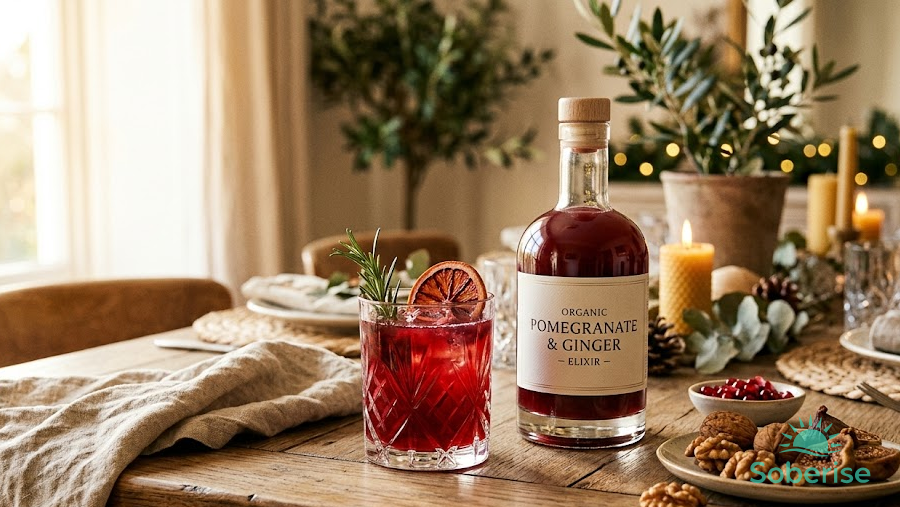
In fact, the reaction of those around you often depends not on your sobriety, but on how you feel in this role. If you’re nervous or looking for excuses, you subconsciously signal: “something’s wrong with me.” But if you hold an alternative drink in your hand — for example, a non-alcoholic mix — and behave calmly, your behavior quickly becomes part of the general background.
Most people at a party focus on their own enjoyment rather than analyzing other people’s glasses. This is also confirmed by social psychology data: pressure loses its power if a person shows confidence and does not make excuses. At a corporate event or wedding, you can keep an alternative on hand—even a simple vegetable juice—and this already lowers the level of tension.
- Replacing the usual toast with a non-alcoholic drink relieves psychological pressure.
- The technique of delayed response (“I’ll skip this for now, I’ll come back to it later”) gives you time and eases the tension of the situation.
- Flavored waters or functional drinks like decaffeinated tea are psychologically perceived as part of the ritual, even if they do not contain alcohol.
If the brand is important to you — choose natural non-alcoholic drinks: they contain high levels of flavonoids and antioxidants, which not only replace the ritual but also stabilize the nervous system during stress.
3. Why the craving for alcohol increases during holidays: the anatomy of triggers
Festive triggers: what sparks the desire to drink
Holidays are not just a date on the calendar. They are a powerful set of triggers for a brain experiencing sobriety. When everyone around is filling their glasses and toasts are being made, your dopamine pit becomes deeper. This isn’t about weakness — it’s a signal from the pleasure center: the anticipation of a festive “high” doesn’t match reality, and the brain starts demanding the old recipe for joy.
Most people think that the main trigger is alcohol on the table. But often the decisive role is played by the ritual itself: the moment of opening the bottle, the clinking of glasses, or even the scent of citrus in the champagne. At this moment, the effect of mirror neurons is activated—the brain picks up the emotions of those around, copies their behavior, and the craving doubles.
A separate level is social pressure. Even if you’ve prepared a non-alcoholic mint mix or a vegetable juice with antioxidants, the question “why aren’t you drinking?” sounds like a challenge. It’s not just words—it triggers a stress response that automatically increases anxiety and intensifies cravings. The feeling of isolation here works better than any alcohol marketing.
To reduce this impact, try the ritual substitution technique: repeat the same actions, but with a different drink. Even the simple gesture of raising a glass with decaffeinated tea lessens the feeling of “difference” and partially dampens the craving trigger.
- Choose an alternative to routine: berry mix, vegetable juice.
- Think in advance about how you will respond to invitations to drink.
- Watch your body: burning in the stomach or nervousness are the first signals of a trigger, not signs of a bad character.
Why it works: Replacing the ritual gives the brain a familiar scenario, but without the reinforcement of alcohol—the craving fades faster because the brain’s reward system does not receive its usual stimulus.
CBT and HALT: how the techniques help recognize triggers
CBT techniques and the brief HALT self-diagnosis are not just dry theory. They are concrete tools in your hands, especially when triggers are coming from all sides. CBT teaches you to recognize automatic thoughts—“I can’t celebrate without alcohol,” “everyone is looking at me”—and to replace them with reality: your anxiety is often exaggerated, and most people are preoccupied with themselves.
The HALT technique (hungry, angry, lonely, tired) helps you “catch” the moment when cravings become especially aggressive. In the holiday rush, you can easily skip a meal or get tired faster than usual. If you ignore these states, the trigger activates automatically, and your brain suggests: “alcohol is a quick fix.”
Try the delayed response technique: give yourself 20 minutes before reacting to an impulse. During this time, your stress level decreases and you can act more consciously. Experience shows: even a short pause often saves you from a breakdown.
Do not expect the craving to disappear completely. But observing your triggers and understanding the biochemistry of the process provide real control, not just the illusion of willpower. More about the mechanisms of withdrawal — in the article of the first week of sobriety.
4. How sobriety affects the perception of joy and the sense of self in a company
After rejection: how the response to satisfaction changes
After giving up alcohol, the brain faces the phenomenon of a “dopamine pit.” This is a state when the natural level of dopamine drops sharply due to the cessation of artificial stimulation—and familiar pleasures seem dull. You may feel that even your friends’ favorite jokes or festive dishes do not bring the expected joy. This is not your character—it’s a matter of neurochemistry. When everything around you seems gray during a corporate party or wedding, know this: it’s a standard stage of recovery, not a sign of being an “outcast.”
Alcohol briefly enhances feelings of joy, but then leaves an even deeper emptiness. Studies show that after sharp dopamine spikes, the body hardly responds to natural stimuli for a while. That’s why even signature vegetable juice with antioxidants or a non-alcoholic mint mix may seem bland. After a few weeks, the receptors will start to respond differently. The main thing here is not to expect an instant effect, but to give the brain time to adjust.
Most people perceive the absence of euphoria as a sign that sobriety “doesn’t work.” But this is just adaptation. To support your mood, try the ritual substitution technique: for example, instead of a glass, choose drinks with a bright flavor or decaffeinated tea with herbs that contain natural antioxidants. This isn’t magic, but a gradual retraining of the brain’s responses.
Typical mistake: Many people try to “wait out” the discomfort of isolation by avoiding company. But this only deepens the dopamine slump. It’s better to allow yourself measured social contact—even a brief conversation or a shared toast without alcohol speeds up the recovery of your response to joy.
A new role in the company: how not to lose yourself
Refusing alcohol at a celebration immediately changes your role in the company. Instead of being “one of your own among your own,” you may feel like an observer. Social pressure and the effect of mirror neurons often make you doubt your choice—when everyone raises their glasses, your brain literally tries to copy the behavior of others. This is not weakness, but a survival mechanism described in mirror neurons.
In order not to lose yourself, it’s worth preparing a few phrases for responses and practicing the technique of delayed answers (“I’ll join later,” “I’m not drinking today, but I’m celebrating with you”). This works better than trying to be “like everyone else.” The problem of isolation often isn’t about refusing alcohol, but about lacking a clear plan of action in moments of social pressure.
If relatives or friends insist on drinking “to your health,” an acceptable compromise is your own non-alcoholic alternative with a bright color or aroma. This could be a simple drink with lemon and mint added, which outwardly does not differ from a regular cocktail. This way, you don’t lose the social ritual but maintain control over yourself.
Remember: coercion or pressure from others rarely helps to change behavior. Support and acceptance are more effective than imposition. Learn more about this in the article about how to support a person at home.
Sobriety does not take away the ability to feel joy in company — it sharpens the need for authentic interaction. Over time, the quality of communication increases, and the feeling of isolation gives way to new ways of enjoying yourself. Don’t expect quick changes — be patient with yourself.
5. Step-by-step guide: how to stay sober at a party and remain comfortable
Step 1: Prepare your sobriety plan (CBT strategy)
The biggest risk at a party is acting on autopilot. The brain triggers old patterns, and the dopamine dip makes any offer to drink especially tempting. A sobriety plan is not just a list of “don’t drink.” It’s a specific scenario: what to do when cravings arise, how to respond to social pressure, what answer to give when invited to drink. CBT techniques allow you to pre-script your reactions in challenging situations.
Preparation exercise: write down three typical triggers (for example, a toast, a joke, a group photo with glasses) and three alternative actions or responses. This reduces anxiety and gives a sense of control. Contrast: most people rely on willpower, but it is preparation that reduces the risk of relapse — and this is proven by the experience of many.
Step 2: Choose your own drink and explanation
A traditional glass of champagne or a “signature cocktail” at a corporate event is not about alcohol, but about ritual. When you prepare your own alternative, your brain gets the signal: “I’m in the game,” even without ethanol. Antioxidant drinks based on ginger or pomegranate juice refresh and energize thanks to vitamin C.
Choosing a specific drink is also a way to maintain confidence in a group. For example, the Voelkel brand offers natural blends with turmeric: vibrant color, rich flavor—an ideal substitute for a festive glass. An excuse like “no alcohol for me today, I want to experience everything to the fullest” works better than silence. Your confidence is your best argument.
- Choose a non-alcoholic drink that you like in terms of taste and appearance
- Think in advance of a brief, calm explanation of your position
- Hold a drink in your hand — it reduces the number of drink offers
Step 3: Apply the HALT technique before the holiday
HALT is not just an acronym. It’s a tool for quick self-check: are you Hungry, Angry, Lonely, or Tired? Each of these states increases social pressure and makes the brain more vulnerable to spontaneous decisions.
Take a pause before the celebration and go through each point. Hungry? Eat something with protein or complex carbohydrates — for example, a toast with hummus or an apple with peanut butter. Angry or anxious? A short walk or deep breathing reduces neural arousal in 10-15 minutes. If you feel tired — allow yourself 15 minutes of rest, even if it seems like there’s no time.
Check yourself: If the answer is “yes” to at least one HALT point — act first, then go to the party. This is your insurance against impulsive decisions.
Step 4: Stay in touch with support (app, groups, friend)
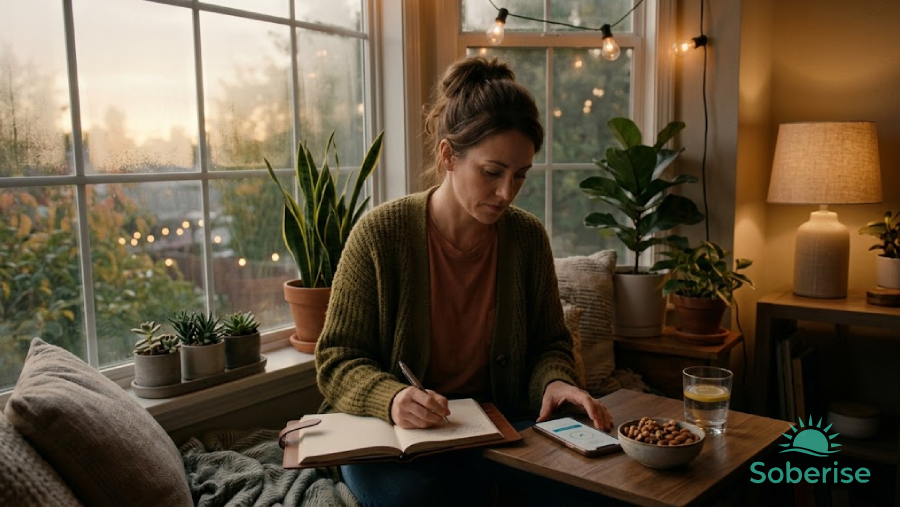
Saying “stop” at the right moment is easier when you have someone from your “inner circle” nearby. Research shows: even a short message to a friend or a support group during stressful times halves the risk of relapse. Sobriety tracking apps provide visual progress and remind you why you are doing this.
Before the holiday, identify a person or community you can turn to in case of stress. Don’t wait for a “critical point” — write to them immediately after arrival or at the first trigger. This is not weakness, but your protection, which works even under strong social pressure.
Step 5: Reward yourself for each step
The brain is used to getting dopamine from a festive glass. But a reward is not just alcohol or sweets. Create a new association: for each completed stage of the evening, give yourself a small but pleasant reward. For example, at the end of the evening, listen to your favorite track, watch a short video, order something from the drinks category, or allow yourself 10 minutes of absolute silence.
The main thing is to clearly record these moments. The brain gradually gets used to new patterns and starts expecting a reward specifically for sobriety. This is not a trick, but a new habit. If it seems like a “childish” approach—remember that this is exactly how the dopamine cycle works even in adults. Don’t ignore this tool: it’s simple, but neurochemistry is on your side.
6. Comparison: main sobriety strategies during holidays
There is no universal recipe — everything depends on your triggers, the type of company, and your own experience. Here’s how the most popular approaches work in practice:
| Parameter | Pre-prepared answers to “Why aren’t you drinking?” | Ritual substitution (for example, a non-alcoholic mint mix or vegetable juice) | Delayed response technique |
|---|---|---|---|
| Stress from social pressure | Decreases noticeably—you won’t get confused or improvise under pressure | Lessens due to visible “participation” in the shared ritual | Temporarily increases, but then quickly subsides when attention shifts |
| Influence of the mirror neuron effect | Remains if everyone is drinking, but it’s easier to resist thanks to a clear stance | Noticeably decreases: when you have a drink in your hand, your brain registers “participation in the ritual” | The influence remains, but you gain time and don’t react impulsively |
| Feeling of isolation | May occur, but the compensation is self-confidence | Decreases, because participating in the “shared action” gives a sense of inclusion | Isolation feels stronger if you haven’t prepared an alternative |
| Feeling “second-rate” | Practically disappears if your answers are confident and calm | Doesn’t arise at all if others are also interested in alternatives | May intensify if the group is persistent |
| Risk of relapse due to a dopamine dip | Moderate—depends on resilience and experience from previous celebrations | Low if the drink brings satisfaction (for example, antioxidant juice, decaf tea) | Moderate—the main thing is not to leave yourself alone at the crucial moment |
| Who it suits | For those who are not afraid to talk openly about their sobriety and value clarity | For those who value atmosphere and ritual; if you want to “blend in” with the general dynamic | For those who are not yet ready for direct answers or are not confident in their abilities |
Why do I crave alcohol so much during the holidays?
Holidays amplify social pressure and activate the mirror neuron effect: you see others enjoying the ritual — and your brain automatically wants to repeat it. Plus, the dopamine dip during recovery makes any promise of quick “joy” especially attractive. To avoid the trap, prepare your drink for the toast in advance: a non-alcoholic mix with mint or a vegetable juice with antioxidants — the ritual remains, the choice is different.
After a sober holiday, I feel like an outcast — how do I overcome this?
This feeling doesn’t arise from sobriety itself, but when you don’t have your own strategy for responses and prepared actions. Social psychology says: when you know in advance what to say and what to do with your hands, isolation recedes. Prepare a few phrases and replace the ritual — for example, take your favorite decaf tea or come up with your own toast. Experience shows: the more confidence you have in your behavior model, the faster this feeling passes.
After a festive meal without alcohol, I still feel bad — what should I do?
The reason isn’t always the refusal of alcohol itself: often it’s fatigue, an emotional slump, or just exhaustion from socializing. The HALT mechanism — Hungry, Angry, Lonely, Tired — works during the holidays too. Restore your balance: choose a drink that brings back energy, for example, a vegetable juice with antioxidants, and allow yourself some quiet time. This isn’t a defeat, but a caring step towards yourself.
Does being sober at celebrations really make me less interesting to others?
Studies of social dynamics show: most people don’t pay attention to who drinks what, unless you emphasize it yourself. Interest in a person doesn’t depend on what’s in their glass, but on how you engage in conversation. If you feel tension, try switching to a conversation or suggest a new toast with a non-alcoholic alternative — shifting the group’s focus is easier than it seems.
How do I know if celebrating without alcohol suits me?
The answer is simple: it’s your personal test. If after the holiday you feel even one victory — you didn’t give in to pressure, didn’t feel empty, didn’t wait for it all to end — that’s your signal. Try different approaches: ritual substitution, delayed response technique, new non-alcoholic drinks. The answer always comes from experience, not other people’s opinions.
Твій лічильник тверезості — в кишені
Soberise — мобільний додаток для підтримки тверезості. Трекер днів, щоденний чекін, SOS-режим при тязі та коло підтримки.
Conclusion: how to celebrate without alcohol and not lose confidence in yourself
The feeling of being an “outcast” at a party isn’t about sobriety itself, but about lacking a plan and the tension from social pressure. When you’re armed with the delayed response technique, understand the mirror neuron effect, and have your own replacement ritual, the situation changes dramatically. It’s no longer about “surviving,” but about learning to take control of the moment — and noticing how your sobriety influences the mood and choices of others.
- Prepare your scenario for the evening in advance: come up with 1–2 response phrases to offers to drink, and plan an exit strategy if you feel uncomfortable.
- Choose a specific non-alcoholic drink that you truly enjoy, for example, a vegetable smoothie — let it be your own ritual.
- Set up a simple sobriety tracker or emotion diary: note when HALT (Hungry, Angry, Lonely, Tired) kicks in — and what really helps you stay balanced.
Celebrating without alcohol isn’t a refusal of joy, but the start of a new self-confidence that becomes a habit with each holiday.