
- Micro-slip: why one sip is not the end of the road
- Why the brain reacts so painfully to a micro-slip
- How not to lose motivation after a micro-slip
- Step-by-step guide: what to do after a micro-slip
- Comparison: strategies for responding to a micro-slip
- Frequently Asked Questions
- Conclusion: how not to let one micro-slip stop your recovery
ATTENTION: This material is for informational purposes only and is intended for general support. It is not medical advice, does not provide diagnoses, and does not replace professional treatment. If you experience severe physical withdrawal symptoms, be sure to consult a doctor or qualified medical professional.
1. Micro-slip: why one sip is not the end of the road
After a micro-relapse, it may seem that all previous efforts are devalued. But even a single sip does not erase weeks or months of sobriety: part of the progress and skills remain. Many people experience such moments, and it does not mean that the journey is over. Experience shows: even after a micro-relapse, you can move forward if you don’t let emotions take over.
A micro-breakdown is often accompanied by a wave of shame, disappointment, and fear of losing control. However, the nervous system does not instantly return to its initial state. Self-regulation habits remain, even if it seems otherwise. The body’s reaction may be acute, but this is only part of a complex recovery process.
Next — about why the brain reacts this way to a micro-relapse and how not to lose motivation after such an experience. This is not about perfection, but about a real journey that continues even with difficulties.
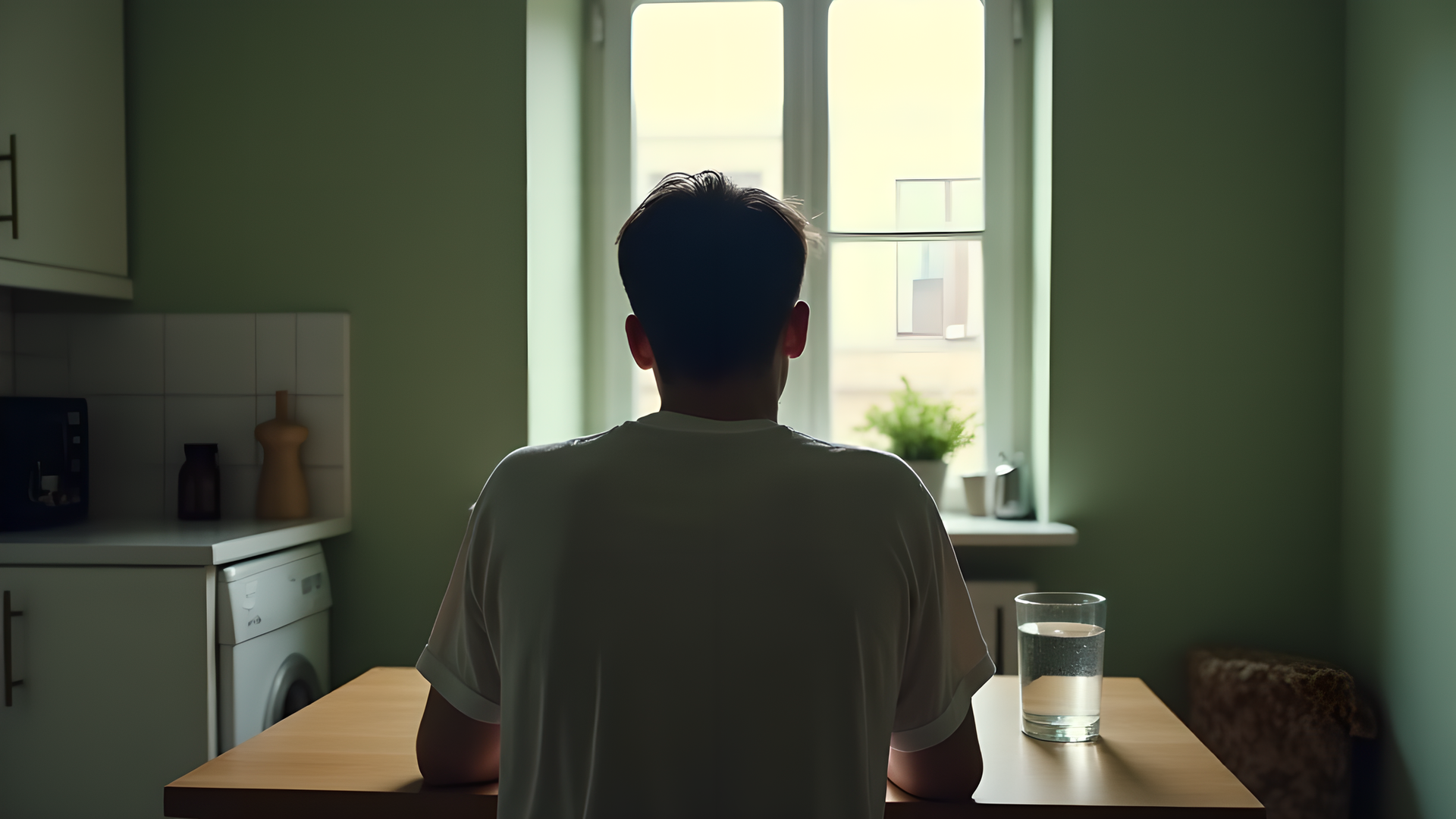
2. Why does the brain react so painfully to a micro-breakdown
Trigger: what starts the cycle of self-blame
After a micro-relapse, the brain often reacts not so much to the fact of breaking sobriety itself, but to the emotional trigger—feelings of guilt or shame. This sets off a familiar cycle: “I let myself down—so everything is ruined.” New habits are still fragile, and any deviation can be perceived as a danger signal.
In many people, this process intensifies if there is no support. Loneliness increases anxiety, and stress reactions can provoke a return to old behavior patterns.[2] This is especially noticeable in the first weeks or months after quitting alcohol.
Self-blame often becomes the main trigger for repeated relapses. The ability to recognize this cycle and not give in to it is already a step forward.
Try: if you feel a wave of guilt — write down what exactly happened and what you feel. This will help break the automatic cycle of negative thoughts.
After the craving: how the brain perceives ‘rollback’ in sobriety
A micro-relapse is often perceived as a return to the old reward pattern. But this does not mean that all skills are lost. The reward system can react sharply even to a small amount of alcohol, causing an emotional surge and increased psychological craving.[1] However, many notice: after a brief relapse, the ability to stop and not go further often remains.
Behavioral patterns are formed gradually. One episode does not erase already acquired self-regulation experience. Research shows that even after a micro-relapse, the brain retains some of the new connections if stress is not intensified by additional self-destruction. Therefore, it is important not to confuse a micro-relapse with a full relapse.
Sleep, mood, and anxiety levels may fluctuate after a micro-relapse. This is not always a sign of failure, but rather a reaction of the nervous system, which is still adapting to new conditions. A setback is not a reset, but a fragment of a complex process.
In the context of support, it is important not to isolate yourself after a minor setback. Experience shows: even when it seems like you’ve taken a step back, part of the progress remains if you don’t let frustration take over.

3. How not to lose motivation after a minor setback
Seeking support: why it’s important not to be alone
After a micro-breakdown, emotions can overwhelm you like a wave: shame, disappointment, fear of losing everything you’ve achieved. This is not just a matter of character — biology is at work here. The brain under stress exaggerates the threat and triggers negative scenarios. It is isolation that amplifies these feelings.
One of the most effective ways to stop this spiral is to reach out to another person. It could be a friend, a support group, or even a brief anonymous chat. For many people, emotional tension eases after a conversation, and the situation seems less critical. You don’t have to reveal all the details right away—sometimes it’s enough to say: “This happened to me, I want to stay sober.”
If you feel instability—sleep disturbances, anxiety, intrusive thoughts—try simple SOS tools: pause, breathing, jotting down your thoughts, reaching out for support. The feeling of support, even in a short message, often changes the course of your thoughts and reduces the risk of a new breakdown.
- Save the number of a person you can text or call in a difficult moment.
- Choose a support group or an app with an SOS chat function.
- Use the 10-minute rule: before acting impulsively, text someone or write down your thoughts.
Why it works: Social interaction activates areas of the brain that inhibit impulsive decisions and can reduce stress levels.
Rethinking progress: how to see the path not as ‘all or nothing’
After a micro-relapse, many people fall into the “all or nothing” thinking trap. It seems that one mistake cancels out all previous efforts. But the path to recovery is rarely a straight road. Even after small behavioral lapses, changes remain that gradually form new habits.
A micro-relapse is not a return to zero. The brain and nervous system have already partially adapted to sober life, and even if cravings or an emotional downturn occur, this does not erase previous experience. For some people, sleep and mood may fluctuate, but this does not always mean a loss of control.
Instead of focusing on the mistake, try to evaluate the whole journey: which situations have become easier for you, which triggers have you learned to recognize? Counting “sober days” can sometimes be misleading if you don’t take into account your overall progress in self-regulation skills.
- Keep brief notes about small victories: refusing a second helping, avoiding triggers, timely exit from a tense situation.
- Use the sobriety tracker as a tool for analyzing trends, not as a verdict.
- Regularly return to your motivations: why you started this journey and what has already changed in your life.
It is precisely the ability not to stop after a mistake that distinguishes those who gradually restore their quality of life.

4. Step-by-step guide: what to do after a micro-relapse
Step 1: Write down what triggered it
Craving often does not arise out of nowhere. For many people, after a minor slip, it is an unconscious trigger that sets off a wave of self-blame. Writing down the specific situation helps relieve tension: thoughts become clearer, and emotions less chaotic. This is not just a diary, but a tool for identifying causes. Experience shows: when you see the trigger on paper, your brain gradually learns to recognize it earlier. You don’t have to write a lot — a few sentences or a short list already make a difference.
Step 2: Restart the sobriety tracker
Many people are afraid of this action because it seems to cancel out all previous progress. But in reality, a tracker is not a sentence, but a way to record reality. Marking a micro-relapse does not erase your skills or experience, but gives you a starting point for the next step. In the Soberise app, this takes just a few seconds, but psychologically it can restore your sense of control over the situation. Important: restarting is not the end, but a transition to a new attempt.
Step 3: Take a short pause and breathe
After a micro-breakdown, the brain often shifts into a state of anxiety: stress may increase, the heart beats faster, and thoughts become confused. A short pause—even 2–3 minutes—gives the nervous system time to reset. Deep, slow breathing (for example, exhaling longer than inhaling) gradually reduces tension. This activates the parasympathetic nervous system, which helps to “slow down” stress. After such a pause, it is easier to assess the situation soberly.
Step 4: Share in a support group or with a trusted person
Isolation after a micro-relapse often intensifies feelings of guilt. When you talk about the situation, it loses some of its power. In support groups (AA, NA) or even in a personal chat with a friend, you can get feedback without judgment. The experience of others shows: openness reduces the risk of repeated relapse because it involves social control and support. You don’t have to tell everyone — one person you trust is enough.
Step 5: Review your recovery plan
After a micro-breakdown, the plan often seems ineffective — this is a natural reaction. But now is the time to look at it critically: were there any “blind spots”? Maybe you need additional support, new habits, or a different schedule. Small adjustments (for example, adding an evening check-in or changing your route home) can already change the course of the next day. A plan is not dogma, but a living tool that adapts to your experience.
Typical mistake: Most people after a micro-relapse try to “overcome” themselves and ignore their emotions. But suppressing feelings often leads to repeated relapses. Admitting disappointment is not a weakness, but the first step toward real change.

5. Comparison: strategies for responding to a micro-slip
The same micro-breakdown can be experienced differently. The choice of strategy often determines whether you return to stability or sink into self-blame.
| Parameter | Ignoring and self-blame | Analysis and acceptance of experience | Seeking support (groups, apps) |
|---|---|---|---|
| Response to feelings of guilt | Shame increases, there is a desire to “hide” the relapse | The feeling of guilt is acknowledged, but does not become the focus | The feeling of guilt is shared with others, the emotional weight decreases |
| Likelihood of repeated relapse | Often increases due to accumulated stress | Decreases thanks to reflection and working with triggers | Further reduced through external support |
| Impact on motivation | Motivation drops, a sense of hopelessness appears | Motivation is maintained, there is a desire to move forward | Motivation is strengthened through shared responsibility |
| Attitude towards one’s own progress | The illusion of “everything is lost” arises | Progress is seen as a process, not as an ideal | Progress is recorded together with others, an objective view appears |
| What happens to self-regulation skills | Tendency to ignore or devalue acquired experience | Skills are analyzed, some self-control is maintained | Skills are reinforced through discussion and practice |
| Who it is suitable for | For those who are not yet ready for change (but this path rarely yields results) | For those who seek to understand the reasons and are not afraid of emotional work | For those who value community, structure, and external support |
I feel like everything is ruined after a micro-relapse. How do I regain motivation?
This feeling is familiar to many. Part of your skills and experience remain even after a relapse. Try to note what worked before the micro-relapse and what triggered it. Take a pause, breathe, remind yourself: recovery is a process with ups and downs, not a perfect straight line.
Why do I feel such intense shame after just one sip?
For most people, even a minimal relapse causes shame and disappointment. This is a reaction of the nervous system, which is still sensitive to stress. Instead of self-blame, try writing down your thoughts and sharing them with someone you trust. This will help you avoid getting stuck in guilt.
What should I do if micro-relapses keep happening?
Repeated micro-relapses are often linked to unresolved triggers or exhaustion. It’s important to honestly note in which situations this happens and what emotions precede it. You can use the HALT technique or record your reactions in a tracker. If you experience strong physical symptoms (tremor, confusion, seizures, palpitations) — contact a doctor or emergency service.
How can I quickly return to sobriety after a micro-relapse?
Returning to a stable state happens gradually — for some, it takes a few days, for others, longer. Don’t wait for the perfect moment: mark the date, write out a plan, reach out for support. For many people, returning to familiar sober rituals helps make this stage easier.
Conclusion: how not to let one micro-relapse stop your recovery
One micro-relapse does not erase your entire journey: some self-regulation skills remain, even if it feels like everything is back to square one. The “freeze-frame” technique — when you capture the moment of relapse, don’t judge yourself, but analyze what exactly worked as a trigger — helps you regain control.
- Write down briefly what happened and what emotions you’re feeling now — even a few words in your notes or an app can already relieve the tension.
- Do a check-in: remind yourself how far you’ve come and what has changed in your habits. This will help reduce the feeling that “it was all for nothing.”
- Call your support person or leave an SOS message in a group. A response from someone else is not weakness, but a signal: you are not alone at this point.
You have more influence over your journey than it seems after a micro-relapse. Control returns with each next action.
Your sobriety counter — in your pocket
Soberise — a mobile app for supporting sobriety. Day tracker, daily check-in, SOS mode for cravings, and a support circle.