
- Is it really possible to quit drinking on your own: what research says
- Why quitting alcohol on your own feels harder than expected
- Mechanisms of craving: how the brain and stress influence the decision to return to alcohol
- Common pitfalls: why the solo path is often interrupted
- What helps: the role of daily tracking and support
- Step-by-step guide: how to integrate one supportive action into your day
- Comparison: solo path, online support, and peer groups
- Frequently Asked Questions
- Conclusion: how to take the first step toward sobriety—and not be alone
ATTENTION: This material is for informational purposes only and is intended for general support. It is not medical advice, does not provide diagnoses, and is not a substitute for professional treatment. If you experience severe physical withdrawal symptoms, be sure to consult a doctor or qualified medical professional.
1. Is it really possible to quit drinking on your own: what research says
If it feels like every evening becomes a challenge without alcohol — that’s normal, and there are ways to go through this journey without putting extra pressure on yourself. Is it really possible to quit drinking alcohol on your own? Research shows: some people can indeed change their habits without outside support, but this path is often accompanied by waves of craving, mood swings, and periods of doubt.[1] This is not a sign of weakness or a “wrong” approach, but a typical reaction of the brain and nervous system to changing a long-standing routine.
Important to know: even if everything seems easy at first, there may be periods of sudden fatigue, irritability, or insomnia. This does not mean you are doing something wrong. Changes in the brain’s reward system, which have formed over years, do not disappear instantly.[2] For many people, the path to sobriety looks like a series of waves, not a straight road. Starting on your own is possible, but support, tracking, and honest acknowledgment of your own limitations often make the process more sustainable.
Next, we will discuss why the first days and weeks can be unpredictable, how cravings work, and what really helps to stay on the chosen path.

2. Why does quitting alcohol on your own seem harder than expected
After the first day: why anxiety and irritability appear
Quitting alcohol often triggers a wave of unexpected emotions. You may notice that even ordinary everyday things cause irritation. This does not indicate weakness or lack of willpower. Often, the reason lies in changes in the brain’s reward system: dopamine levels may decrease, and the reaction to familiar stimuli becomes less predictable. The brain is literally learning to live without quick mood boosters.
From the experience of people who try to quit alcohol, the first days can be especially unstable. Anxiety and irritability arise even in those who previously considered themselves calm. This is not a “relapse” or a failure — it’s a stage of neurochemical adjustment. If you feel you can’t cope with the wave of emotions, take a pause: go for a short walk, write a few words in your notes, or call someone you trust.
Most people expect the discomfort to last a day or two. But cravings, anxiety, or irritability can come in waves—even after a week or two. This is not a sign that the chosen path is wrong. Forming new habits always comes with fluctuations. That is why many people experience frustration: they are not prepared for the “uneven” dynamics of change.
- Anxiety and irritability are common reactions to decreased stimulation of the brain’s reward system.[3]
- Do not ignore these states: record them and analyze what exactly triggered them.
- Support from others or short breaks often help to get through the acute stage.
Tip: If you feel a sudden surge of anxiety, try the “freeze-frame” technique: stop, take three deep breaths, write down one thought that is bothering you right now. This helps you regain control in the moment.
Sleepless night: how sleep changes in the first weeks
Sleep quality often changes after quitting alcohol. Many people experience shallow sleep, frequent awakenings, or even nighttime anxiety. This is not a punishment and not a sign that the body is “breaking down.” Alcohol acted as an “artificial” sleep regulator for a long time, so after quitting, the brain gradually seeks a new balance.
The first nights may seem endless. Even if you are physically tired, falling asleep becomes difficult. The inhibitory processes in the nervous system have not yet recovered, and the natural regulation of sleep is being restructured. For some people, this stage lasts a few days, for others—it drags on for weeks. It is important to remember: this is temporary, even if it feels like no changes are happening.
Instead of waiting for quick relief, try to focus on routine: go to bed at the same time every night, avoid screens before sleep, write down your feelings in the morning. This does not guarantee instant results, but gradually creates a new support for your nervous system.
Most people do not expect that sleep can change so much. But it is often sleep problems that cause feelings of fatigue, irritability, and self-doubt. It is important here not to blame yourself, but to acknowledge: this transition is part of the process, not its end.
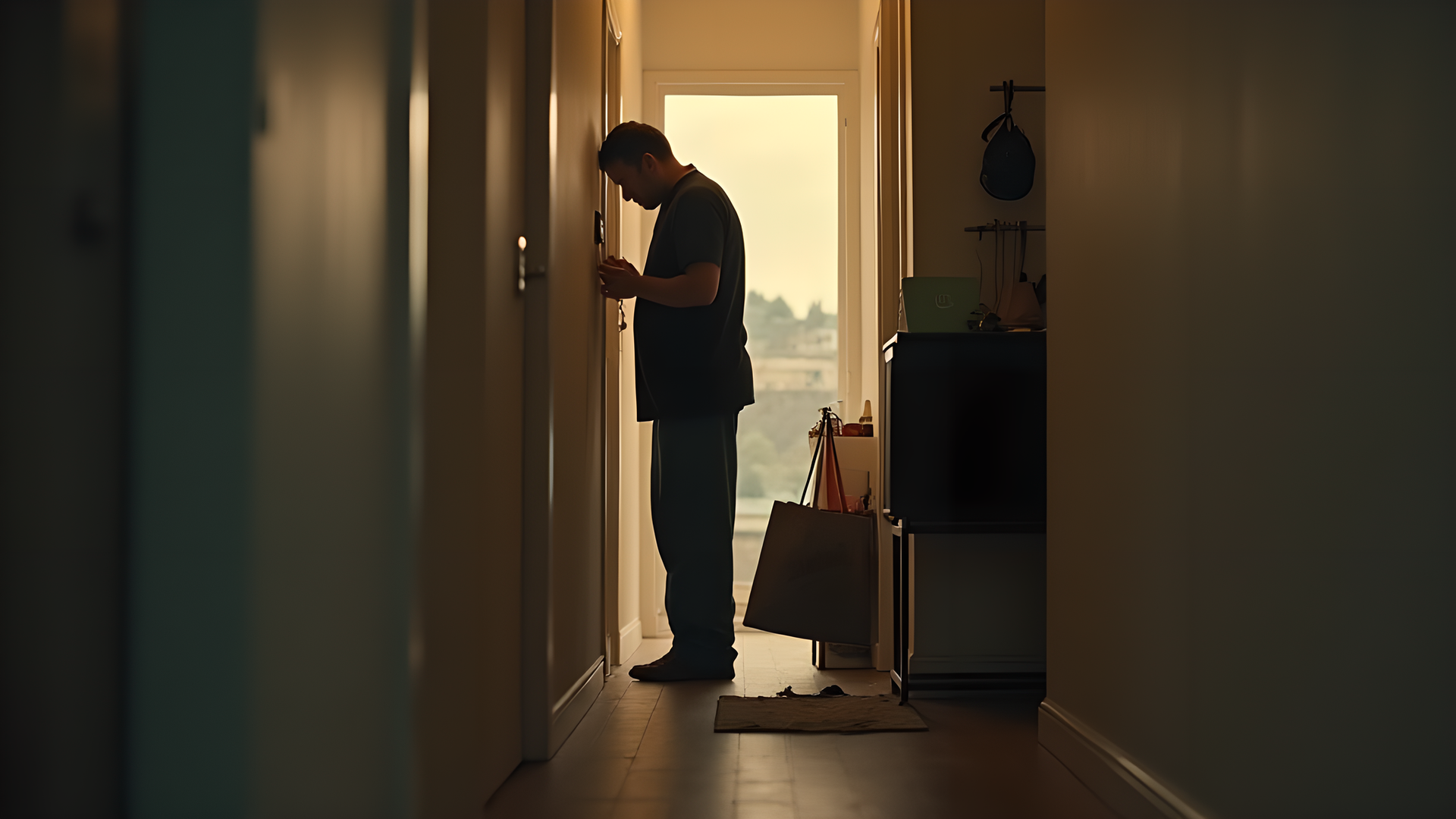
3. Craving mechanisms: how the brain and stress influence the decision to return to alcohol
Trigger: work stress — how it triggers cravings
Stress at work often acts as an invisible trigger for alcohol cravings. When tension builds up, the brain’s reward system starts demanding quick relief. Studies show that during moments of intense stress, cortisol levels can rise, and the dopamine system becomes less sensitive to ordinary pleasures. That’s when the brain suggests a familiar scenario—to return to the old habit that once brought relief.
Most people think that stress is just emotions. But it’s also biochemical changes that affect impulsivity and self-control. That’s why even after a few weeks of sobriety, a sudden work rush can trigger an acute desire to drink.
In such moments, the “stop-pause” technique helps: when you feel a wave of craving, take a short break — go outside for fresh air, write a few words in a notebook, or simply pause for 2–3 minutes. This gives your brain time to cool down and not react automatically. Changing your physical environment even for a few minutes often reduces the intensity of the impulse.
Another working option is to switch to a different activity. A short walk or a few minutes of physical exercise activate areas of the brain responsible for self-regulation. You can read more about how physical exercise can be an alternative for relieving tension in the article about the benefits of movement for the nervous system.
- Short break — at least 2 minutes without gadgets or work
- Change of location: leave the room or office
- Write down feelings or thoughts in a notebook
Why it works: When you consciously interrupt an automatic reaction, the prefrontal cortex is activated—the area of the brain responsible for decision-making and control, not impulse.
After an argument: why the brain seeks quick relief
After a conflict or argument, many people experience a sharp increase in cravings. This is not just an emotional reaction, but also the result of a surge in negative emotions that the brain seeks to “mute.” In such moments, the reward system looks for a familiar path—alcohol, because it is associated with instant relief.
The peculiarity is that after a quarrel, the so-called “pain avoidance reflex” is activated. The brain literally forces you to look for a way to quickly remove the discomfort. This is where the illusion arises that returning to an old habit is the only way out.
From the experience of people going through this stage, proactive action works best. If you know that an argument or conflict could be a trigger, prepare a list of actions for yourself: calling a friend, taking a short walk, joining an online support group, or using tracking in an app. This does not guarantee a complete absence of cravings, but it often reduces the risk of impulsive decisions.
Many people think that a relapse is the end of the process. But the brain has already started to change, and even one conscious action after a difficult situation is a step forward, not backward. Here’s the thing: a wave of craving often lasts no more than 20–30 minutes, and if you don’t feed it, it gradually fades away.

4. Typical pitfalls: why the independent path is often interrupted
Evening alone: how isolation affects the risk of relapse
After a hard day, the brain seeks quick relief. In a state of isolation, this desire intensifies—not only because of fatigue, but also due to the lack of external support. It is in such moments that the brain’s reward system is especially sensitive to old habits, and even a brief wave of anxiety or sadness can trigger cravings.
Most people underestimate the power of routine. If the evening used to be associated with a glass of alcohol, the brain automatically suggests this idea. It’s not just a memory, but a real trigger of a chain: trigger — impulse — action. Without a new strategy, this cycle easily returns, even if you felt confident during the day.
Recovery experience shows: it’s better not to wait until temptation becomes uncontrollable, but to prepare an alternative in advance. This could be a short conversation with a friend, writing down your emotions in a notebook, or even simply changing your location — for example, going for a walk instead of staying at home. Such a step doesn’t guarantee the complete absence of cravings, but it often reduces their intensity.
Typical mistake: Many people decide to “just endure” an evening alone, ignoring anxiety. But isolation often intensifies cravings. It’s better to include at least one action that breaks the routine, even if it seems like it’s not working.
Holidays and gatherings: social pressure and expectations
Celebrations or corporate events are a real test of sobriety. In such situations, alcohol becomes not just a drink, but a symbol of belonging to the group. Here, it’s not only craving at play, but also the fear of standing out or looking “weird” among others. Social triggers can be stronger than physical ones.
Even if you are internally ready to refuse, external pressure often appears in the form of jokes, encouragement, or direct offers. This is not about weakness — it’s about the natural need to belong to a group. On a hormonal level, stress may increase, and the brain looks for a quick solution to avoid discomfort.
One of the practical steps is to prepare your response in advance. A simple scenario: “I’m not drinking today — I’ve decided to try a new approach.” A clear answer reduces tension and gives a sense of control. For many people, this lowers the risk of a spontaneous relapse, especially if there is at least one supportive person nearby — even online.
Another trap is expecting that after the first successful experience, it will get easier. In reality, social triggers can come back in waves, and that’s normal. Don’t demand a perfect reaction from yourself: acknowledge every day you managed to hold on, even if it was difficult.
- Plan alternative activities for the evening — even if it’s just a simple walk.
- Prepare a short response to offers to drink — it reduces anxiety.
- Get support — in the chat, through the app, or in a group of like-minded people.

5. What helps: the role of daily tracking and support
Daily check-in: how it works in practice
When you give up alcohol, your brain continues to try to return to the old reward pattern for a long time. During this period, it’s important not just to count the days, but to track changes in your well-being, mood, and even small victories. Daily tracking is not about control, but about being aware of your own reactions. Research shows that people who note their condition every day are more likely to notice real triggers and can act before the impulse arises.
Instead of waiting for the “perfect day,” try a simple routine: every morning or evening, briefly write down what caused you stress or cravings. This will help not only to track patterns but also to reduce the feeling of chaos. For many, such notes become the first step toward a more stable mood. If you don’t know where to start, you can use a tracking app or simply keep notes.
Gradual analysis helps to see: craving waves are often associated not with alcohol, but with emotions, fatigue, or routine. Try to record these moments for at least a week — this is already a working tool, not just statistics. You can find more about how to survive the first week and what really works in the article about the first week without alcohol.
- A brief check-in every morning or evening
- Recording of triggers and reactions
- Mood note — even if it seems that nothing has changed
Check yourself: If you can’t remember the last time you felt calmer — try to note these moments every day. This will show that progress exists even in the little things.
Support groups: why even the online format can be effective
Most people think that support is about “telling strangers everything.” But experience shows: even a short message in an online group or chat can change the course of a difficult evening. The online format allows you to feel part of a community without leaving your home. This is especially important during moments of isolation or after stressful events.
In support groups, you receive not only advice but also a mirror of your own states. When someone shares a similar experience, the level of shame and self-blame decreases. Instead of the closed loop of “I couldn’t handle it again,” a space for honest dialogue and new solutions appears. For many people, it is precisely these conversations that help them hold on in critical moments.
Support can take different forms: audio chats, text groups, brief check-ins with like-minded people. Each format has its advantages, but the main thing is regularity and the feeling that you are not alone. If it seems that no group feels like “yours” — that’s normal. Finding your circle often takes time. But even one conversation can change your attitude towards yourself and the process of quitting.

6. Step-by-step guide: how to integrate one supportive action into your day
Step 1: Identify your main trigger today
The first step is not to ignore, but to notice what exactly today is causing the most tension or the urge to return to an old habit. For some, it may be fatigue after work; for others, anticipation of a celebration or a lonely evening. Instead of waiting for the trigger to “hit,” try asking yourself right now: what is most irritating, worrying, or making you want to drink today?
The brain often operates on autopilot, offering a familiar scenario. But when you name the trigger out loud or to yourself, the area of conscious control is activated. This doesn’t guarantee instant calm, but it helps create a pause between impulse and action. Even if the reason seems “minor,” it still affects your overall state.
Tip: If you can’t identify a single trigger, choose the easiest moment of tension to identify during the day and work with it.
Step 2: Make a short entry in your diary or app
Fixing thoughts is one of the most effective techniques in behavioral psychology. You can write down a single sentence: “Today I am thrown off by…” or “Right now I feel…”. It’s not necessary to keep a detailed diary — a few words are enough.
Such a record gives the brain a signal: the situation is under control, there is no need to “numb” it with old habits. In recovery experience, it is often this simple action that reduces anxiety levels. The mechanism is simple: when you transfer thoughts from your head to paper or an app, the prefrontal cortex area is activated, which is responsible for self-regulation. This is not magic, but a working tool that gradually changes reactions.
If you use Soberise or another tracker, add a short comment for today. This will help track how your triggers and mood change over time.
Step 3: Choose one person or group for a brief contact
Independence is not about isolation. Even a short message or call to someone you trust can change the dynamic of your day. You don’t have to tell the whole story — a phrase like “Today is a tough day” or “I decided not to drink, but I’m feeling tense” is enough.
Social contact changes the way the reward system works: the brain receives dopamine not from alcohol, but from support. This does not always work instantly, but for many people, this very step reduces the risk of impulsive decisions. If there is no close person, an online group or a themed chat will do. The main thing is not to be left alone with your thoughts.
Step 4: Check your condition in 20 minutes
It often seems that the wave of craving won’t subside until you give in to it. But for many people, the intensity of the impulse changes after just 15–20 minutes. This is due to how the stress system works: the acute peak doesn’t last forever, even if it feels like it does.
Set a timer for 20 minutes after completing the previous steps. Ask yourself: has my state changed? Is the tension still as acute? Even if there are only minor changes, this is already a small step toward changing automatic patterns. If the state remains difficult or intensifies, do not ignore this signal — sometimes additional support or consultation with a specialist is needed, especially if there are physical symptoms.
- Mark the trigger
- Write down your thoughts
- Make contact with a person or group
- Reassess the condition in 20 minutes
Even a single such action can gradually change your attitude towards yourself and the process of quitting. The result is not always felt immediately, but this algorithm is a real way to influence your day.

7. Comparison: independent path, online support, and like-minded groups
Even the same day without alcohol can feel completely different — it all depends on whether you are walking this path alone or if there is support by your side.
| Parameter | Independent path | Online support (chats, apps, forums) | Peer groups (AA, NA, in-person meetings) |
|---|---|---|---|
| Control over the process | You choose the pace and strategies yourself. All responsibility is on you. | You have space for independence, but you can always get advice or support. | The group sets the rhythm and rituals, there is a leader or mentor. |
| Availability of support | No external support, you rely only on yourself. | You can reach out anonymously, at any time, even in the middle of the night. | You need to attend meetings at a set time and place. |
| Response to relapses | High risk of self-blame and isolation, harder to get back on track after a break. | You can quickly get support, hear others’ experiences, reduce anxiety. | The group supports even after a relapse. There is space for honest discussion of difficulties. |
| Anonymity and comfort | Complete privacy, but sometimes there is a feeling of loneliness. | You can remain anonymous. Less fear of judgment, though sometimes lacking “live” contact. | Live communication, but for some this may be stressful or unusual. |
| Motivation and consistency | Motivation relies only on internal resources, which often fluctuate. | There are reminders, shared challenges, trackers. This adds incentive not to stop. | The sense of belonging to a group can support you even during difficult periods. |
| Who it suits | For those who don’t like to share personal matters, have experience with self-discipline, but are ready for the risk of isolation. | For those who value anonymity, seek quick support, and are not always ready for live communication. | For those who value community, regular contact and structure, or have experience with relapses when alone. |
I want to try quitting drinking on my own — where should I start to avoid relapsing?
Start simple: track your feelings and triggers that make you want to drink. Don’t try to change everything at once — it’s enough to add one new action, like keeping short notes or using a tracker. If you experience severe physical symptoms (tremors, intense anxiety, confusion), consult a doctor.
What should I do if all my friends drink, but I want to quit?
Feeling isolated is a common companion when making changes in a familiar circle. Try to think of alternatives in advance: politely decline, suggest a different activity, or find at least one person who will support your decision. Even a short break from your usual company can help your brain gradually form new habits.
How do I cope with insomnia in the first days without alcohol?
Sleep disturbances at the beginning are a common reaction of the nervous system. Insomnia can last several days or even weeks. Try to stabilize your routine: go to bed and wake up at the same time, put away screens an hour before sleep, write down thoughts that keep you awake. If insomnia is accompanied by severe physical discomfort, consult a doctor.
Why do I crave alcohol after stress and how can I stop it?
Stress increases the urge to return to familiar relief patterns. Alcohol seems like a quick fix, but this effect is short-lived. Try switching to another action: a short walk, a breathing pause, talking to a supportive person. Such actions gradually build a new system for responding to stress.
Is it normal for cravings to return even after a few weeks?
Yes, waves of craving can occur even after a month of sobriety — this is not a failure, but part of the process. The brain and habits adjust gradually. If cravings return, pause, note your thoughts, take a break, or reach out to a support group. This is a normal stage and does not erase your previous progress.
Conclusion: how to take the first step toward sobriety — and not be left alone
The first real step is not a promise of “never again,” but a simple action here and now: noting your current state, even if your emotions are all over the place and motivation is shaky. The technique of short notes or an SOS plan works not because it instantly removes cravings, but because it creates a pause between impulse and action — and this moment is often decisive.
- Open a journal or Soberise and write down exactly what you feel right now: without censorship, in two or three sentences.
- Make an SOS plan: a short list of actions for acute cravings (for example, calling someone, going outside, taking a 10-minute pause).
- Choose one person or group for a short check-in today — even if you just write “I’m having a hard time right now.”
You’ve already done more than it seems: control starts with small actions, not with the perfect mood.
Your sobriety counter — in your pocket
Soberise — a mobile app to support sobriety. Day tracker, daily check-in, SOS mode for cravings, and a support circle.